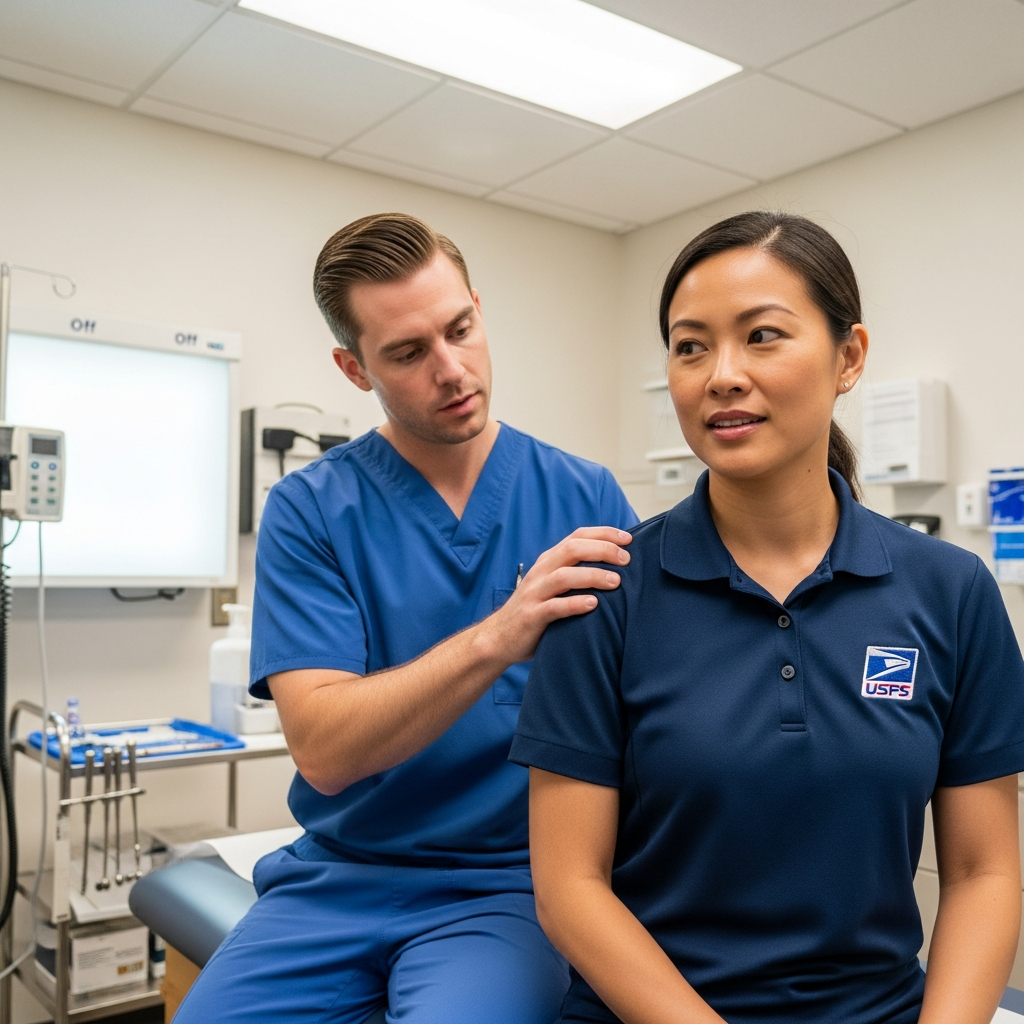
How DOL Doctors Evaluate Car Accident Injuries
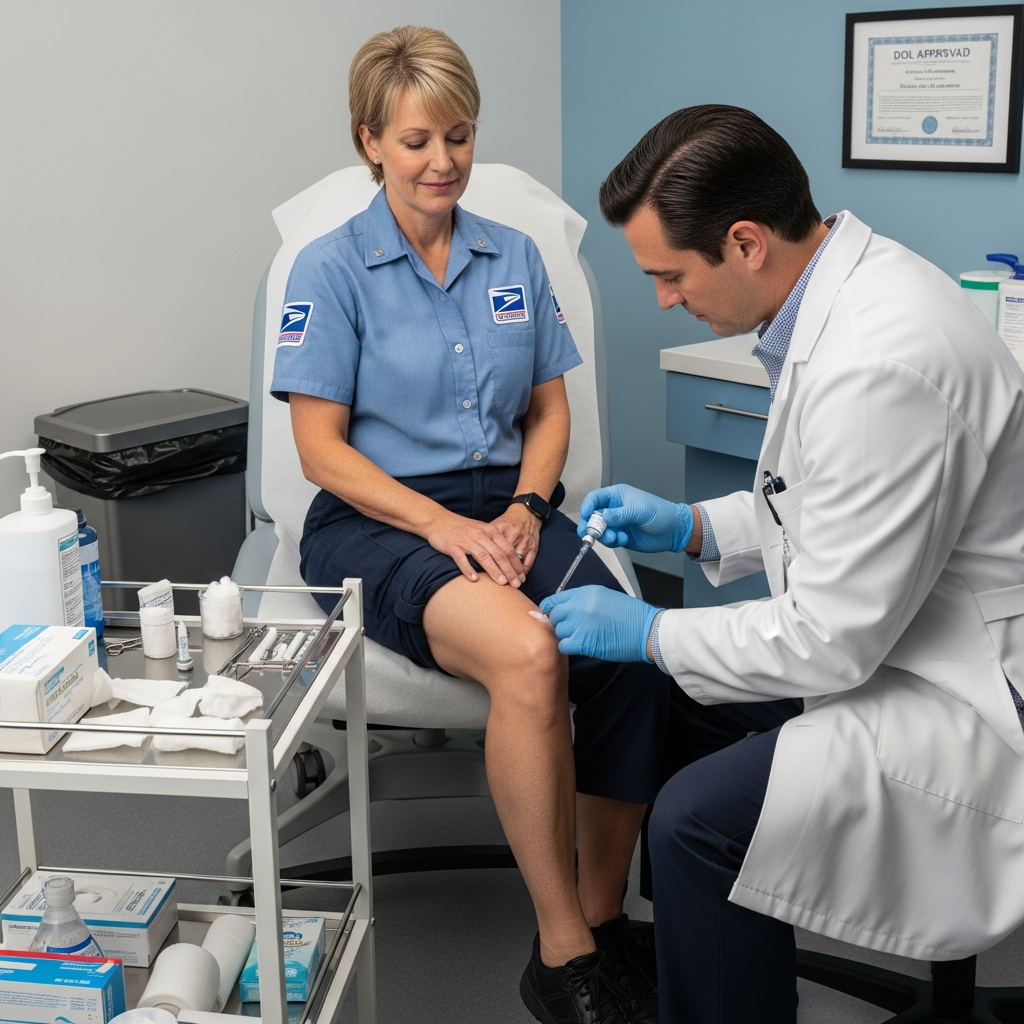
You’re driving home from work, maybe thinking about dinner or that meeting tomorrow, when BAM – some guy runs a red light and slams into your driver’s side door. Your heart’s pounding, your neck feels weird, and honestly? You’re not even sure what just happened.
Fast forward three days. That “weird feeling” in your neck has turned into a constant, nagging pain that shoots down your arm every time you turn your head. Your back aches when you get out of bed. And here’s the kicker – your regular doctor can’t see you for two weeks, but someone mentioned you should see a “DOL doctor” instead.
Wait… what’s a DOL doctor?
If you’ve never heard that term before, you’re definitely not alone. Most people stumble into this world of Department of Labor physicians completely by accident (no pun intended). But here’s the thing – if you’ve been hurt in a car crash, understanding how these specialized doctors evaluate your injuries could make the difference between getting the care you need… and fighting for months to prove your pain is real.
See, here’s what nobody tells you about car accident injuries: they’re sneaky little devils. You might walk away from a fender-bender feeling fine – adrenaline’s a powerful thing – only to wake up the next morning feeling like you got hit by a truck. Which, technically, you did.
But proving that your current pain stems from last Tuesday’s accident? That’s where things get complicated. Insurance companies aren’t exactly known for taking people at their word, and regular doctors – bless them – often aren’t equipped to navigate the maze of documentation, causation, and legal requirements that come with motor vehicle injuries.
That’s where DOL doctors come in. These aren’t your typical family physicians. They’re specialists who’ve been trained specifically to evaluate work-related injuries and, in many cases, motor vehicle accidents. They know exactly what to look for, how to document it, and – this is crucial – how to establish whether your current symptoms are actually related to your accident.
Think of them as medical detectives, but instead of solving crimes, they’re solving the puzzle of your pain.
Now, I know what you might be thinking – “Great, another doctor who’s going to poke and prod me, then send me a bill I can’t afford.” And look, I get it. Medical bills after an accident can feel overwhelming when you’re already dealing with car repairs, insurance calls, and trying to get back to normal life.
But here’s what’s actually fascinating about DOL evaluations – they’re incredibly thorough in ways that might surprise you. We’re talking about doctors who’ll spend 45 minutes to an hour really examining you, asking detailed questions about your accident, your symptoms, how they’ve changed over time… It’s not the rushed 15-minute appointment you might be used to.
They’re looking at things like: Did your headaches start immediately after the accident, or three days later? Can you still turn your neck the same way you could before? Is that lower back pain new, or something you’ve dealt with for years? These details matter – a lot – when it comes to your treatment and any potential compensation.
And here’s something else worth knowing: DOL doctors understand the biomechanics of car accidents. They know that a 25 mph rear-end collision can absolutely cause soft tissue injuries, even if your car barely has a scratch. They get that whiplash isn’t just something people make up to get money from insurance companies – it’s a real injury with real symptoms that can last for months.
Throughout this article, we’re going to walk through exactly what happens during a DOL evaluation. What questions they’ll ask (and why they’re asking them). What tests they might run. How they determine causation – basically, how they connect the dots between your accident and your current symptoms. And maybe most importantly, how you can prepare for your appointment to make sure you get the most accurate assessment possible.
Because at the end of the day, you deserve to have your injuries properly evaluated and documented. Your pain is real, your concerns are valid, and understanding this process? It’s the first step toward getting the care and answers you need.
Why Car Accident Injuries Are Different from Everything Else
You know how your regular doctor might spend five minutes checking your sore throat? Well, DOL doctors – that’s Department of Labor physicians who handle workers’ comp cases – they’re operating in an entirely different universe when it comes to car accidents.
Think of it like this: if your family doctor is a neighborhood coffee shop, DOL doctors are more like those forensic investigators you see on TV. They’re not just asking “does it hurt?” They’re asking “how much does it hurt, when did it start hurting, what makes it worse, and oh – can you prove it?”
It’s not that they don’t trust you (okay, maybe they’re a little skeptical), but they’re dealing with legal and financial implications that go way beyond whether you need a prescription. Every evaluation they do could end up in court, affect insurance payouts, or determine if someone can return to work. The stakes are… well, they’re pretty high.
The Timeline Detective Work
Here’s where things get interesting – and honestly, a bit confusing. DOL doctors are obsessed with timelines in a way that might seem almost ridiculous at first.
They want to know exactly when your neck started hurting after that fender-bender. Was it immediately? Two hours later? The next morning? And here’s the kicker – they’re trained to spot what they call “delayed onset” versus what might be… let’s call it “conveniently timed” symptoms.
Think about it like a crime scene investigator. They’re not just looking at the final picture; they’re reconstructing the entire sequence of events. Did your shoulder pain start the day after the accident, or did it mysteriously appear the day after you talked to a lawyer? (Yes, they actually consider these things.)
The human body after trauma is like a slow-motion movie sometimes. Adrenaline can mask injuries for hours or even days. Inflammation builds gradually. Your muscles might not seize up until you’ve been sleeping in weird positions for a week. DOL doctors know all this – but they also know that not every delayed symptom is legitimate.
The Physical Evidence Hunt
Regular doctors often rely heavily on what you tell them. DOL doctors? They’re looking for physical proof like they’re solving a puzzle.
They’ll examine you with the intensity of someone trying to find a needle in a haystack. Range of motion tests, strength assessments, reflex checks – they’re creating a comprehensive map of your body’s current state. But here’s what makes it tricky: they’re also comparing everything to what they think your body should be like based on the accident details.
Got whiplash from a rear-end collision at 15 mph? They know the typical injury patterns for that scenario. Claiming severe back pain from what the police report calls a “minor impact”? They’re going to dig deeper.
It’s not that they don’t believe you, but… actually, let me be honest here. Sometimes they don’t believe you. They’ve seen enough cases to know that the relationship between accident severity and injury claims isn’t always straightforward. Some people walk away from horrific crashes with minor bruises, while others claim disability from what looks like a parking lot tap.
The Documentation Obsession
If regular medical records are like casual journal entries, DOL documentation is like writing a legal brief. Every observation, every measurement, every patient complaint gets recorded with courtroom-quality precision.
They’re not just noting that you have “some neck pain.” They’re documenting the exact location (C4-C5 region), the quality of pain (sharp, stabbing, 7/10 intensity), what triggers it (rotation to the right beyond 45 degrees), and what relieves it (nothing, apparently).
This level of detail might seem excessive when you’re sitting there just wanting someone to help with your pain. But remember – these doctors know their findings might be scrutinized by insurance adjusters, opposing attorneys, and other medical experts. They’re building a case file, not just a medical chart.
The Objectivity Challenge
Here’s something that might surprise you: DOL doctors are trained to be almost aggressively objective. While your family doctor might give you the benefit of the doubt on subjective symptoms, DOL physicians are looking for measurable, verifiable evidence.
They’re like fact-checkers in white coats, really. And sometimes that can feel cold or dismissive when you’re genuinely hurting and just want validation that your pain is real.
What to Expect During Your DOL Medical Evaluation
Here’s something most people don’t realize – DOL doctors aren’t trying to catch you in a lie. They’re actually looking for specific medical markers that tell a story about your accident. But (and this is important) they need clear, consistent information from you to write an accurate report.
Come prepared with your timeline written down. Not just “my neck hurt after the crash,” but “I felt fine immediately after, then woke up the next morning with stiffness that got worse over the next three days.” DOL physicians are trained to spot injury patterns, and delayed onset pain? That’s completely normal for soft tissue injuries. But if you can’t remember when symptoms started or keep changing your story… well, that raises red flags.
Bring every medical record you have. Emergency room visits, your family doctor’s notes, physical therapy records – even that chiropractor you saw once. The DOL doctor needs the full picture to understand how your injuries have progressed (or haven’t).
How to Communicate Your Pain Effectively
This might sound obvious, but most people are terrible at describing their pain in ways that actually help doctors. Saying “it hurts really bad” tells a physician almost nothing useful.
Instead, get specific. Is it sharp and stabbing when you turn your head? Dull and achy in the mornings? Does it radiate down your arm or stay localized? Rate it on that infamous 1-10 scale, but be realistic – if you’re walking and talking normally, claiming a 10/10 pain level isn’t going to be credible.
DOL doctors also pay attention to how your pain affects daily activities. Don’t just say “I can’t work.” Explain that you can’t look over your shoulder to back out of driveways, or that typing for more than 20 minutes causes shooting pains down your arm. These functional limitations are pure gold for building a strong case.
Actually, here’s something insurance companies hope you don’t know – DOL physicians are specifically trained to document “objective findings” versus “subjective complaints.” Your job is to help them find those objective signs.
The Physical Examination: What They’re Really Looking For
DOL doctors follow standardized examination protocols, and understanding what they’re testing can help you… well, not perform better (this isn’t a test to pass), but communicate more effectively.
Range of motion testing isn’t just about how far you can turn your head. They’re watching for protective muscle guarding – when your muscles unconsciously tense up to protect injured areas. This happens automatically when you’re hurt, and it’s one of those objective findings that carries real weight.
They’ll also check for muscle spasm, trigger points, and neurological symptoms. If you’ve been experiencing tingling, numbness, or weakness, mention it. These can indicate nerve involvement, which significantly changes how your injury is classified.
During strength testing, don’t try to be a hero. If lifting your arm causes pain, that decreased strength is a measurable finding. But don’t exaggerate either – DOL doctors can often detect when someone is intentionally limiting their effort.
Documentation That Strengthens Your Case
Keep a daily symptom diary starting immediately after your evaluation (or before, if you’re reading this early enough). Note pain levels, activities that worsen symptoms, sleep disturbances, medication needs. This isn’t just busy work – patterns in your symptoms help validate the doctor’s findings over time.
Take photos of any visible injuries, bruising, or swelling. Even if bruises have faded by your appointment, having documentation of acute injury signs supports your case.
If you’re seeing other healthcare providers, make sure they’re communicating with each other. Conflicting treatment notes between your physical therapist and the DOL doctor can create unnecessary complications.
Common Mistakes That Weaken Your Position
Don’t minimize your symptoms because you think it makes you look tough. DOL evaluations aren’t about being stoic – they’re about accurate medical documentation. If sitting through the appointment is uncomfortable, say so.
Avoid discussing settlement amounts or legal strategy with the DOL physician. Their job is medical evaluation, period. Keep the conversation focused on your symptoms and functional limitations.
And here’s a big one – don’t skip the appointment or show up late. It sounds basic, but you’d be surprised how many people sabotage their own cases with poor attendance. The insurance company will absolutely use that against you.
Remember, the DOL doctor’s report becomes a cornerstone of your case. Give them the clear, honest information they need to document your injuries accurately.
When Documentation Doesn’t Match How You Actually Feel
Here’s the thing that drives people absolutely crazy – you walk out of a car accident feeling relatively okay, maybe just a little shaken up. But three days later? You can barely turn your neck, your back is screaming, and you feel like you’ve been hit by… well, a car.
The problem is, that initial adrenaline rush after an accident can mask serious injuries. Your body’s basically in survival mode, pumping out natural painkillers that make everything feel manageable. Then reality sets in.
The solution isn’t to downplay how you feel in that first appointment. Be completely honest about your symptoms, even if they seem minor. Tell the DOL doctor, “I feel okay right now, but I’m worried about delayed pain” or “My neck feels a little stiff, but I can move it fine.” This gives them a baseline and shows you’re being thoughtful about your body’s response.
And here’s something most people don’t know – you can always request a follow-up appointment if symptoms worsen. DOL doctors understand that soft tissue injuries often don’t show their true colors immediately.
The Insurance Company Runaround (And How to Sidestep It)
Let’s be real about insurance companies for a minute. They’re not exactly eager to pay out claims, and they’ve gotten pretty sophisticated at finding reasons to deny or minimize payouts. Sometimes they’ll even try to steer you toward their preferred doctors – ones who might be a little too… conservative… in their assessments.
This puts you in a weird position. You need medical care, but you’re also aware that someone’s going to scrutinize every word in your medical file.
The best approach? Focus entirely on getting the care you need and being completely truthful about your symptoms. Don’t try to game the system by exaggerating – that almost always backfires. But don’t minimize things either just because you’re worried about being seen as a complainer.
Keep detailed notes about your daily symptoms. How’s your sleep? Can you lift your coffee mug without wincing? Are you avoiding certain movements? This kind of specific, day-to-day information helps DOL doctors understand the real impact on your life.
When Your Regular Doctor and DOL Doctor Disagree
This is incredibly frustrating, but it happens more often than you’d think. Your family doctor might say you need physical therapy and time off work, while the DOL doctor clears you for full activity. Now what?
First, understand that DOL doctors are specifically trained to evaluate accident-related injuries and disability. They’re looking at things through a different lens than your regular doctor, who knows your overall health history and might be more conservative in their recommendations.
Don’t panic if there’s a disagreement. Instead, make sure both doctors have complete information. If your family doctor prescribed physical therapy, bring those notes to your DOL appointment. If the DOL doctor has concerns about your ability to work, share that with your regular doctor.
Sometimes these disagreements actually work in your favor – they show that multiple medical professionals are taking your injuries seriously, just approaching them from different angles.
The “It’s All in Your Head” Fear
Here’s something nobody talks about enough – the anxiety that comes with invisible injuries. You might be dealing with concussion symptoms, chronic pain, or soft tissue injuries that don’t show up on X-rays. Meanwhile, you look fine from the outside.
There’s this nagging voice that whispers, “What if they think I’m making this up?” or “What if I’m actually fine and just being dramatic?”
Trust your body. You know the difference between normal aches and something that’s genuinely wrong. Good DOL doctors understand that many legitimate injuries don’t present with obvious physical signs. They’re trained to evaluate symptoms like headaches, difficulty concentrating, sleep disruption, and chronic pain.
If you’re experiencing symptoms that feel connected to your accident, document them. Note when they started, what makes them better or worse, how they’re affecting your daily life. This isn’t about building a case – it’s about getting appropriate medical care.
Getting the Most from Your DOL Appointment
The biggest mistake people make? Trying to be the “perfect patient.” They minimize their pain, say they’re fine when they’re not, or fail to mention symptoms they think might sound silly.
DOL doctors need the full picture. That includes the random shooting pain in your shoulder, the weird headaches that started after the accident, or the fact that you’ve been more forgetful lately. These details matter, and they help create an accurate assessment of your condition.
What to Expect During Your Initial Assessment
Your first visit won’t be rushed – that’s actually a good sign. A thorough DOL evaluation typically takes 45 minutes to an hour, sometimes longer if you’ve got multiple injuries or a complex case. The doctor needs to document everything properly… not just for your treatment, but because this becomes part of your official record.
Don’t be surprised if you’re asked to repeat your story several times. I know, I know – it feels redundant when you’ve already told the intake coordinator, then the nurse, and now the doctor wants to hear it again. But each person is listening for different details, and honestly? Sometimes patients remember crucial information the second or third time through.
You’ll likely do some basic movements – touching your toes, rotating your neck, raising your arms. Nothing that should cause severe pain, but the doctor needs to see how your body is actually moving, not just what you’re telling them. Think of it like… well, you wouldn’t buy a used car based only on the seller’s description, right?
The Documentation Process (And Why It Matters)
Here’s something most people don’t realize: your DOL doctor is essentially building a legal medical record. Every detail matters – from how you walked into the room to whether you favored one side while sitting down. They’re not being nitpicky; they’re being thorough because this documentation protects both you and them.
The paperwork will feel overwhelming. Forms asking about your pain levels, your work situation, your daily activities… some questions might seem irrelevant. “Why does it matter if I can carry groceries?” Because those everyday activities are how we measure real functional improvement, not just whether you feel better on a pain scale.
Your doctor will explain their findings, but don’t expect a definitive treatment plan on day one. Most legitimate practitioners want to see how you respond to initial interventions before mapping out a long-term strategy.
Timeline Reality Check
Let’s talk timelines, because this is where expectations often get skewed. Minor soft tissue injuries? You might start feeling better in 2-4 weeks, though “better” doesn’t necessarily mean “completely healed.” More significant injuries – herniated discs, complex whiplash, multiple trauma sites – we’re talking months, not weeks.
I’ve seen patients get frustrated when they’re not back to normal after a month of treatment. But think about it this way: if you sprained your ankle badly, you wouldn’t expect to run a marathon two weeks later. Your spine, your neck – these are complex structures that handle enormous stress every day. They need time.
Some people heal faster than others. Age matters, overall health matters, even your stress levels matter. Someone who’s 25, exercises regularly, and has a supportive work environment will likely recover differently than someone who’s 50, sits at a desk all day, and is worried about bills piling up.
Moving Forward with Treatment
Your DOL doctor will typically start conservatively – physical therapy, maybe some medications, definitely activity modifications. This isn’t them being cautious to save money (though I understand why it might feel that way). It’s because most injuries respond well to conservative care, and you really don’t want to jump straight to injections or surgery if you don’t need to.
Physical therapy might start immediately, or your doctor might want to wait until acute inflammation settles down. Both approaches can be appropriate – it depends on your specific injury pattern.
Keep detailed notes about your symptoms. When does the pain worsen? What activities help or hurt? How’s your sleep? These aren’t just random questions – they’re diagnostic clues that help your treatment team adjust your care plan.
When Progress Stalls
Sometimes you’ll hit plateaus. Maybe you improved for the first month, then… nothing. Don’t panic. Healing isn’t always linear – it’s more like climbing stairs than riding an escalator. Sometimes you need to rest on a landing before tackling the next flight.
This is usually when your DOL doctor might recommend additional interventions. Maybe it’s time for an MRI, or perhaps trigger point injections, or a referral to a specialist. These decisions aren’t made lightly – they’re based on specific clinical indicators that suggest you need something beyond standard conservative care.
Stay engaged in the process. Ask questions. Voice concerns. The doctor-patient relationship works best when it’s actually… well, a relationship. Your DOL physician wants you to get better – it’s literally their job, and most of them take that responsibility seriously.
You know, when you’re dealing with the aftermath of a car accident, it can feel like you’re speaking a different language than everyone else. Your insurance company wants forms. Your regular doctor might not fully grasp the complexity of what you’re experiencing. And honestly? You might not even understand what’s happening in your own body yet.
That’s exactly why DOL doctors exist – and why their specialized approach matters so much more than you might realize.
These aren’t just physicians who happened to take a weekend course on accident injuries. We’re talking about medical professionals who’ve dedicated significant portions of their careers to understanding the intricate ways car accidents affect the human body. They know that whiplash isn’t just “neck pain that’ll go away in a few days.” They understand that your headaches might actually be connected to that jarring impact your spine took. And they recognize – this is crucial – that some of the most serious injuries don’t announce themselves with dramatic symptoms right away.
The evaluation process itself is designed around one simple truth: your body is incredibly complex, and car accidents create incredibly complex problems. When a DOL doctor takes you through that thorough examination – checking your range of motion, testing your reflexes, asking about symptoms you might not have even connected to the accident – they’re essentially becoming a detective for your health.
But here’s what I find most reassuring about working with these specialists… they get it. They understand that you’re not trying to exaggerate your pain or “work the system.” They know that soft tissue injuries can be absolutely debilitating even when they don’t show up on basic X-rays. And they’re trained to document everything in a way that actually protects you – both medically and legally.
The documentation piece is huge, by the way. Your future self will thank you for having a comprehensive medical record that clearly connects your symptoms to the accident. Whether that’s for ongoing treatment, insurance claims, or – heaven forbid – legal proceedings down the road, that thorough evaluation becomes your medical foundation.
Most importantly, though, a DOL doctor’s evaluation gives you something precious: clarity. Instead of wondering whether that persistent back pain is “normal” or if those dizzy spells are something to worry about, you’ll have answers. You’ll have a clear picture of what’s actually happening in your body and – just as importantly – a solid plan for getting better.
Look, I know seeking medical care after an accident can feel overwhelming. You’re already dealing with insurance calls, car repairs, maybe even missing work. The last thing you want is another appointment, another form to fill out. But here’s the thing – your health is the one thing you absolutely cannot afford to guess about.
If you’ve been in an accident – even if it seemed “minor” – please don’t wait. Your body deserves that expert evaluation, and you deserve to understand exactly what’s going on. Our team specializes in post-accident care, and we’re here to help you navigate this whole process with the expertise and compassion you need right now.
Give us a call. Let’s get you some answers, and more importantly, let’s get you on the path to feeling like yourself again.