
Home › Federal Workers' Comp › OWCP Claims
OWCP Claims in Indianapolis
An OWCP claims examiner never meets you. They decide your claim from a file. This page explains what has to be in that file, which form does what, the deadlines that actually bite, and why most denials are documentation problems rather than medical ones.
We are the medical side of that file. More than 20 years of OWCP injury claims from one office on Shadeland Avenue.

What is an OWCP claim?
An OWCP claim is a request for federal workers' compensation benefits filed by an injured federal civilian employee with the Office of Workers' Compensation Programs at the U.S. Department of Labor. It is decided under the Federal Employees' Compensation Act, and if accepted it pays for medical treatment, lost wages and permanent impairment — with nothing billed to you or your health insurance.
To accept a claim, OWCP must find five things established. Under 20 CFR 10.115, the claimant must show that the claim was filed on time, that the injured person was a federal employee at the time, that an injury or disease actually occurred, that it happened in the performance of duty, and that the medical condition claimed is causally related to that injury.
Four of those five are facts about your employment. The fifth is medical, and 20 CFR 10.115(f) puts the burden on you: "the claimant is responsible for submitting, or arranging for submittal of, a medical report from the attending physician." That report is where most claims are won or lost, and it is the part we handle.
Sources on this page: 5 U.S.C. 8101 et seq., 20 CFR Part 10, 20 CFR Part 501 and the DOL FECA forms index. This is general information, not legal advice. We are a medical practice, not a law firm and not a government agency. Deadlines change and individual cases differ — verify with your OWCP district office or a FECA attorney.
The five elements every OWCP claim must prove
These are not guidelines. They are the regulatory test at 20 CFR 10.115, and a claim fails if any one of them is missing.
| # | Element | What it means in practice | Who supplies it |
|---|---|---|---|
| 1 | Timely filing | The claim was filed within the FECA time limits — generally three years. | You |
| 2 | Federal employment | You were an employee of the United States at the time of injury. | Your agency |
| 3 | Fact of injury | An injury, disease or death actually occurred. Both that the event happened and that a diagnosed condition resulted. | You + your physician |
| 4 | Performance of duty | It happened while you were doing your federal job. | You + your agency |
| 5 | Causal relationship | The condition you are claiming is causally related to the injury. Not "consistent with." Not "possibly related." Causally related, explained with medical reasoning. | Your physician |
Element 5 is the one that fails. The first four are usually documented by payroll records, an incident report and a date. The fifth requires a physician to write a reasoned medical opinion, and 20 CFR 10.115(f) makes it your responsibility to obtain and submit it. A busy urgent-care note saying "patient reports back pain, work related" satisfies none of it.
The OWCP claim lifecycle, start to finish
Report to your supervisor, in writing
Immediately. For a traumatic injury this is what preserves continuation of pay, and it establishes element 4 while memories and witnesses are fresh.
Request a CA-16 the same week
It guarantees payment to your treating provider for 60 days from the date of injury, before adjudication. Agencies may decline once roughly a week has passed, so the window is short.
File the CA-1 or CA-2 through ECOMP
CA-1 for a traumatic injury from one shift, CA-2 for an occupational disease built over time. Filing happens at ecomp.dol.gov. Your agency then completes its portion. We can't file for you, but we'll walk you through it — and our ECOMP login guide covers the mechanics.
Get examined and documented
Your physician completes the CA-17 duty status report and the CA-20 attending physician's report, plus the narrative that establishes causal relationship. This is the medical evidence the whole claim rests on.
OWCP develops the claim
A claims examiner reviews the file. If something is missing you get a development letter — typically 30 days to supply what's absent. Most of these ask for exactly one thing: a rationalized medical opinion. Answer it properly and promptly.
Acceptance or denial
An accepted claim lists specific accepted conditions by diagnosis. Read that list carefully — OWCP pays only for the conditions it accepted, and anything left off has to be added by a separate request with its own medical support.
Ongoing administration
Updated duty status reports as restrictions change, CA-7 filings for wage loss, CA-2a if the condition recurs, and a schedule award claim once you reach maximum medical improvement. A federal claim is a long document trail; it does not end at acceptance.
Every OWCP form, and who completes it
The forms that matter most in an injury claim, with the official DOL titles. Where we have written a deeper guide, the form number links to it.
| Form | Official title | Purpose | Completed by |
|---|---|---|---|
| CA-1 | Federal Notice of Traumatic Injury and Claim for Continuation of Pay/Compensation | Files a traumatic injury — one event within a single shift. Also claims continuation of pay. | Employee → agency |
| CA-2 | Notice of Occupational Disease and Claim for Compensation | Files an occupational disease — a condition built over more than one shift. Tips for completing your CA-2 → | Employee → agency |
| CA-2a | Notice of Recurrence | Reports that an accepted condition has recurred or worsened after a return to work. | Employee → agency |
| CA-7 | Claim for Compensation | Claims wage loss after continuation of pay is exhausted, and claims schedule awards. What documentation a CA-7 needs → | Employee |
| CA-7a | Time Analysis Form | Breaks down the hours claimed on a CA-7, including leave repurchase. | Employee |
| CA-16 | Authorization for Examination and/or Treatment | Guarantees payment to the treating provider for 60 days from the date of injury, before the claim is adjudicated. | Agency — you must ask |
| CA-17 | Duty Status Report | States your work restrictions and what you can physically do. Drives light-duty offers and wage-loss entitlement. | Physician |
| CA-20 | Attending Physician's Report | The core medical report — diagnosis, causal relationship, prognosis, disability. The attending physician's report explained → | Physician |
| CA-35 | Evidence Required in Support of a Claim for Occupational Disease | The checklist OWCP uses for CA-2 claims. Worth reading before you file one. | Reference |
| OWCP-5c | Work Capacity Evaluation for Musculoskeletal Conditions | Detailed functional capacity assessment OWCP requests for back, neck, joint and limb conditions. | Physician |
| OWCP-915 | Claim for Medical Reimbursement | Reimburses you for covered medical costs you paid out of pocket. | Employee |
| OWCP-957 | Medical Travel Refund Request (A: mileage, B: expenses) | Reimburses travel to authorized treatment. | Employee |
Three of these — the CA-16, CA-17 and CA-20 — can only be completed by a physician. We complete all three in-house, along with the narrative reports that support your CA-1, CA-2 or CA-7.
More on forms: 9 common OWCP forms · which forms your claim requires · the full DOL forms index.
The deadlines that actually bite
The three-year filing limit is the one everyone knows and almost nobody is caught by. These are the ones that cost people benefits.
| Deadline | Time limit | Clock starts | Source |
|---|---|---|---|
| File the claim | 3 years | Date of injury, or the date you knew the condition was work-related | 5 U.S.C. 8122 |
| Ask for a CA-16 | ~1 week | Date of injury. Agencies may refuse after that. | DOL ICS guidance |
| Continuation of pay | 45 days | Traumatic injury only; depends on prompt reporting | 5 U.S.C. 8118 |
| Respond to a development letter | Usually 30 days | Date of the letter — read it, the period is stated | OWCP practice |
| Request a hearing | 30 days | Date of the decision, by postmark | 20 CFR 10.616 |
| Request reconsideration | 1 year | Date of the decision | 20 CFR 10.607 |
| Appeal to ECAB | 180 days | The day after the decision is issued | 20 CFR 501.3(e), (f)(3) |
What a claims examiner is actually reading for
Understanding this changes what you ask your doctor for.
A firm diagnosis, not a symptom
"Low back pain" is a symptom. "L4-L5 disc herniation with left L5 radiculopathy" is a diagnosis. Claims are accepted for diagnosed conditions, and the accepted-conditions list on your decision letter is written in diagnoses.
A mechanism that fits the injury
The report has to describe how the specific work activity produced that specific condition. Lifting a 70-pound tub from floor level and rotating is a mechanism. "Work duties" is not.
Rationalized medical opinion
A term of art, not a formality. It means the physician states an opinion on causation and explains the medical reasoning behind it, with reference to findings and imaging. An opinion without reasoning carries little weight, no matter how confident it sounds.
Internal consistency
Your CA-20, your CA-17 restrictions, your imaging and your account of the incident all have to tell the same story. Contradictions between a duty status report and a narrative are a common and entirely avoidable reason for development.
Why OWCP claims get denied
In our experience the large majority of OWCP denials we review are evidentiary failures rather than medical ones. The injury was real the whole time. What was missing was a document, or a sentence inside a document.
| What the decision says | What it usually means | Fixable? |
|---|---|---|
| "The medical evidence is insufficient to establish causal relationship" | No rationalized medical opinion. The physician stated a conclusion without medical reasoning, or never addressed causation at all. | Usually yes |
| "No firm diagnosis has been provided" | The file documents symptoms rather than a diagnosed condition. | Usually yes |
| "Fact of injury not established" | The account of the incident is inconsistent across documents, or the agency disputes it. | Sometimes |
| "Not in the performance of duty" | A dispute about whether the activity was within your federal duties. | Depends on facts |
| "Untimely filing" | Outside the 3-year limit with no applicable exception. | Rarely |
| "The condition claimed is not causally related to the accepted injury" | You're asking OWCP to cover a condition outside the accepted list. Needs a formal request to expand, with its own medical support. | Often yes |
A denial on the first three rows is a documentation problem with a documentation solution. That is what a claim review is for: identifying which sentence is missing, and producing the report that supplies it.
If your claim is denied: three routes, and one trap
Under 20 CFR 10.600 there are exactly three ways to have a final OWCP decision reviewed. They are not interchangeable, and the order you use them in matters permanently.
| Route | Deadline | New evidence? | Decided by |
|---|---|---|---|
| Hearing or review of the written record Branch of Hearings and Review |
30 days from the decision, by postmark | Yes | An OWCP hearing representative outside the district office |
| Reconsideration by the district office |
1 year from the decision | Yes — this is the route built for new medical evidence | The district office |
| Appeal to ECAB Employees' Compensation Appeals Board |
180 days, starting the day after the decision | No — ECAB reviews the record as it already exists | The Appeals Board |
The trap. 20 CFR 10.616(a) states that to obtain a hearing, "the claimant must not have previously submitted a reconsideration request (whether or not it was granted) on the same decision." Requesting reconsideration first permanently forfeits your right to a hearing on that decision. Because reconsideration has a one-year window and a hearing has only 30 days, people routinely file the easy one first and lose the other without ever being told. If you intend to use both, the hearing request comes first.
Which route fits depends on what went wrong. If the problem is missing medical evidence, reconsideration is usually the right tool, because ECAB will not look at anything that was not already in the file. We are not attorneys and cannot advise you on appeal strategy — but we can produce the medical evidence a reconsideration needs, and for anything beyond that, a FECA attorney is worth the call.
What we do — and what we don't
We complete the physician-side forms
CA-16 authorization, CA-17 duty status, CA-20 attending physician's report, and OWCP-5c work capacity evaluations. In-house, by the treating physician, not delegated to a billing service.
We write rationalized medical opinions
Narrative reports that state a diagnosis, describe the mechanism, and explain the medical reasoning connecting the two — the document element 5 actually requires.
We review denied and stalled claims
Bring your decision letter and what was already submitted. We identify the evidentiary gap and tell you whether it is one we can fill.
We bill the Department of Labor directly
On an accepted claim, nothing goes to you and nothing goes to your health insurance.
We do not file your claim
CA-1, CA-2, CA-2a and CA-7 are yours to file through ECOMP. We are not a government agency and have no access to your ECOMP account. We will walk you through it.
We do not give legal advice
We are a medical practice, not a law firm. Appeal strategy, disputes with your agency and ECAB litigation are for a FECA attorney. We will say so rather than guess.
One scope limit worth knowing before your first visit: under FECA, reimbursable chiropractic services are limited to manual manipulation of the spine to correct a subluxation demonstrated by X-ray. The full explanation is on our federal workers' comp page →
OWCP claims help near you in Indianapolis
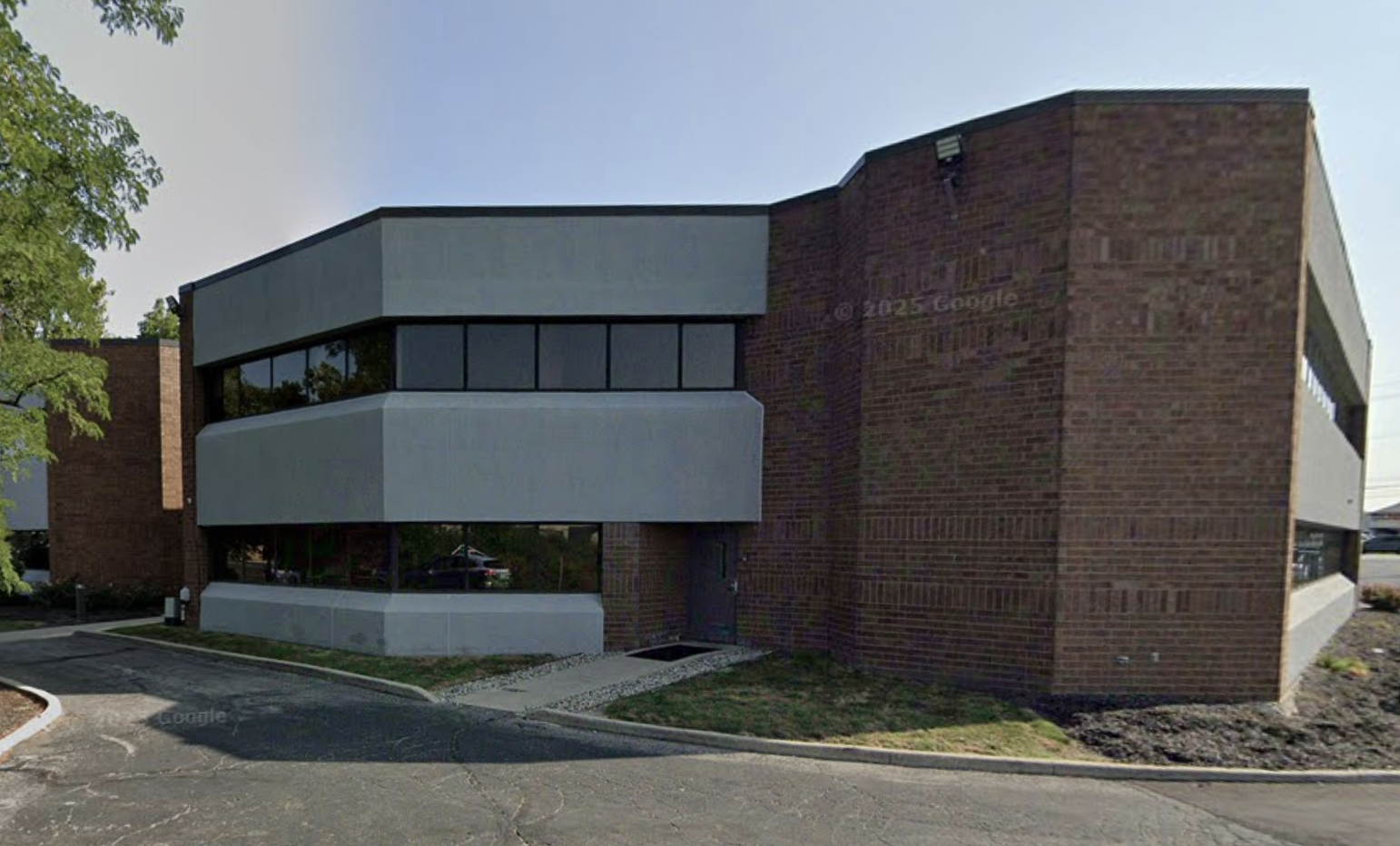
Our office is at 7430 Shadeland Ave #230, Floor 1 of the Shadeland Medical Center on the northeast side of Indianapolis. It is the only DOL Doctors Indiana location.
About fifteen minutes from Fishers and Carmel via I-465 and I-69, twenty from Noblesville and Lawrence. Federal employees also come from Westfield, Zionsville, McCordsville, Greenwood, Avon, Plainfield, Brownsburg, Greenfield and Anderson.
Indiana federal employees fall under the OWCP district office that serves this region; your decision letters will name it and give the address for hearing requests. Searching for an OWCP doctor near me is reasonable for convenience, but worth knowing: under FECA you are not restricted to providers near your home or duty station. You choose your treating physician.
- One location, one physician, consistent records across the claim
- Free parking on site
- Accepted claims billed direct to the Department of Labor
- Denied and stalled claims reviewed at no cost
| Monday | 9:00 AM – 6:00 PM |
| Tuesday | 9:00 AM – 2:00 PM |
| Wednesday | 9:00 AM – 6:00 PM |
| Thursday | 9:00 AM – 6:00 PM |
| Friday – Sunday | Closed |
Dr. Terry J. Tolle, DC

Dr. Tolle has practiced chiropractic in Central Indiana for more than twenty years, and holds Indiana license 08001559A.
For most of that time the core of his work has been federal. He knows what a claims examiner reads first, why "rationalized medical opinion" is a term of art rather than a formality, and how a CA-17 duty status report either protects your job or quietly costs it.
- Doctor of Chiropractic — licensed in Indiana, license 08001559A
- NPI — 1124131826
- 20+ years of OWCP and federal workers' compensation claims
- Indiana State Chiropractic Association — former Board of Directors
- Author — Healing Your Nerves Naturally
4.9 stars across 189 Google reviews
The Calmare treatment center has been so good to me and my injury. They genuinely care about people and provide excellent treatment. The staff is exactly what you want when you require physical therapy for any on the job injury. They're so helpful and knowledgeable and always eager to help you with whatever you may need during treatment.
Reziel C. · Google
Dr. Tolle is the best. Very knowledgeable. I can't recommend highly enough.
Andy L. · Google
I have been coming here since February. The staff is wonderful! Everyone goes above and beyond and everyone is very friendly! I would highly recommend!
Rebecca R. · Google
OWCP claim questions
How long does an OWCP claim take to be approved?
It varies by claim type and district office workload. Traumatic injury claims filed on a CA-1 are generally adjudicated faster than occupational disease claims on a CA-2, which require more extensive causal evidence. The biggest factor within your control is the completeness of the medical documentation submitted at the outset — an incomplete file triggers a development letter, and each round of development adds weeks or months.
What is a development letter and what should I do with it?
It is OWCP telling you exactly what your file is missing, usually with about 30 days to supply it. Read it closely — the specific wording tells you which of the five elements is unproven. Most development letters on medical grounds are asking for one thing: a rationalized medical opinion connecting your diagnosis to your work duties. Bring the letter to us and we will tell you whether it is something we can answer.
What is a rationalized medical opinion?
A physician's opinion on causation that also explains the medical reasoning behind it, with reference to examination findings and imaging. It is a term of art in federal workers' compensation. An opinion stated without reasoning — "this injury is work related" — carries very little weight with a claims examiner no matter how firmly it is worded. The reasoning is the point.
My OWCP claim was denied. What are my options?
Three, under 20 CFR 10.600: a hearing or review of the written record before the Branch of Hearings and Review within 30 days of the decision; reconsideration by the district office within one year; or an appeal to the Employees' Compensation Appeals Board within 180 days. Important ordering rule — 20 CFR 10.616(a) says you cannot get a hearing if you have already requested reconsideration on that same decision, granted or not. If you want both, request the hearing first.
Can I submit new evidence on an appeal?
On reconsideration and at a hearing, yes — reconsideration in particular is the route designed for new medical evidence. At ECAB, no. The Appeals Board reviews the record as it already existed when OWCP decided. That is why getting the medical evidence into the file early, or on reconsideration, matters so much.
Which OWCP forms does my doctor fill out?
Three in most claims: the CA-16 authorization for examination and treatment, the CA-17 duty status report, and the CA-20 attending physician's report. OWCP may also request an OWCP-5c work capacity evaluation for musculoskeletal conditions. You file the CA-1, CA-2, CA-2a and CA-7 yourself through ECOMP. We complete all of the physician-side forms in-house.
Is there an OWCP doctor near me in Indianapolis?
DOL Doctors Indiana is at 7430 Shadeland Ave #230, Indianapolis, IN 46250, on the northeast side — roughly fifteen minutes from Fishers and Carmel via I-465 and I-69. Call (317) 991-5710. Worth knowing that under FECA you are not restricted to providers near your home or duty station; you make the initial choice of treating physician, so choose on documentation quality rather than distance.
Do you file my OWCP claim for me?
No. The CA-1, CA-2, CA-2a and CA-7 are employee-filed forms submitted through the Department of Labor's ECOMP system, and we have no access to your ECOMP account. We are a private medical practice, not a government agency. What we do is the medical side — the physician forms and the narrative reports — and we will walk you through the filing steps.
What does an accepted claim actually cover?
Only the conditions OWCP specifically accepted, which are listed by diagnosis on your acceptance letter. Read that list carefully. If a related condition is not on it, OWCP will not pay for treating it until you formally request that the claim be expanded — and that request needs its own medical evidence establishing causal relationship.
Can I get a second opinion or change doctors?
You make the initial choice of treating physician. Changing afterwards requires written approval from OWCP under 20 CFR 10.316, so it is not automatic. Separately, OWCP may schedule its own second-opinion or referee examination — those are OWCP's examinations, not a replacement for the treating physician you selected.
Does a denied claim mean my injury wasn't real?
No, and this is worth saying plainly. In our experience most denials we review are evidentiary failures — a missing rationalized medical opinion, a symptom recorded where a diagnosis was needed, inconsistencies between documents. The injury was real throughout. A denial is a statement about the file, not about you.
Is the claim review really free?
Yes — no cost and no obligation. Bring your decision letter and whatever has already been submitted. We will tell you which element is unproven and whether it is a gap we can fill. If your case needs an attorney or a different kind of provider, we will say so.
Have your OWCP claim reviewed
New, stalled or denied. Bring your decision letter and what was already filed, and we will tell you where the file is weak and whether we can strengthen it.
- No cost and no obligation
- CA-16, CA-17, CA-20 and OWCP-5c completed in-house
- Rationalized medical opinions for reconsideration
- Accepted claims billed to the Department of Labor
Prefer to talk? Call (317) 991-5710
Where to go next
This page covers the claim. Two other pages cover the system around it and the provider question.
Federal workers' compensation in Indianapolis
The system itself — who FECA covers, what it pays for, continuation of pay and wage-loss rates, the injuries we treat, and the chiropractic scope limits under FECA.
OWCP & DOL doctors in Indiana
What "DOL doctor" and "OWCP doctor" mean, whether the Department of Labor certifies them, your right to choose, and how to vet a provider before you commit.
- Which OWCP forms are required for a federal injury claim
- The attending physician's report (CA-20), explained
- What documentation a CA-7 needs to be approved
- What happens if your DOL work comp claim is denied
- The main requirements to obtain workers' compensation
- Using the OWCP ECOMP login
- About Dr. Terry J. Tolle, DC
- Frequently asked questions
DOL Doctors Indiana
7430 Shadeland Ave #230
Indianapolis, IN 46250
Floor 1 · Shadeland Medical Center
Office Hours
- Monday9:00 AM – 6:00 PM
- Tuesday9:00 AM – 2:00 PM
- Wednesday9:00 AM – 6:00 PM
- Thursday9:00 AM – 6:00 PM
- FridayClosed
- SaturdayClosed
- SundayClosed
DOL Doctors Indiana is a private medical practice and is not affiliated with, endorsed by, or an agency of the U.S. Department of Labor. We are not a law firm and do not provide legal advice or file claims on your behalf. Information on this page is general in nature. Rules and deadlines change — verify specifics with your OWCP district office or a FECA attorney. Individual results vary.