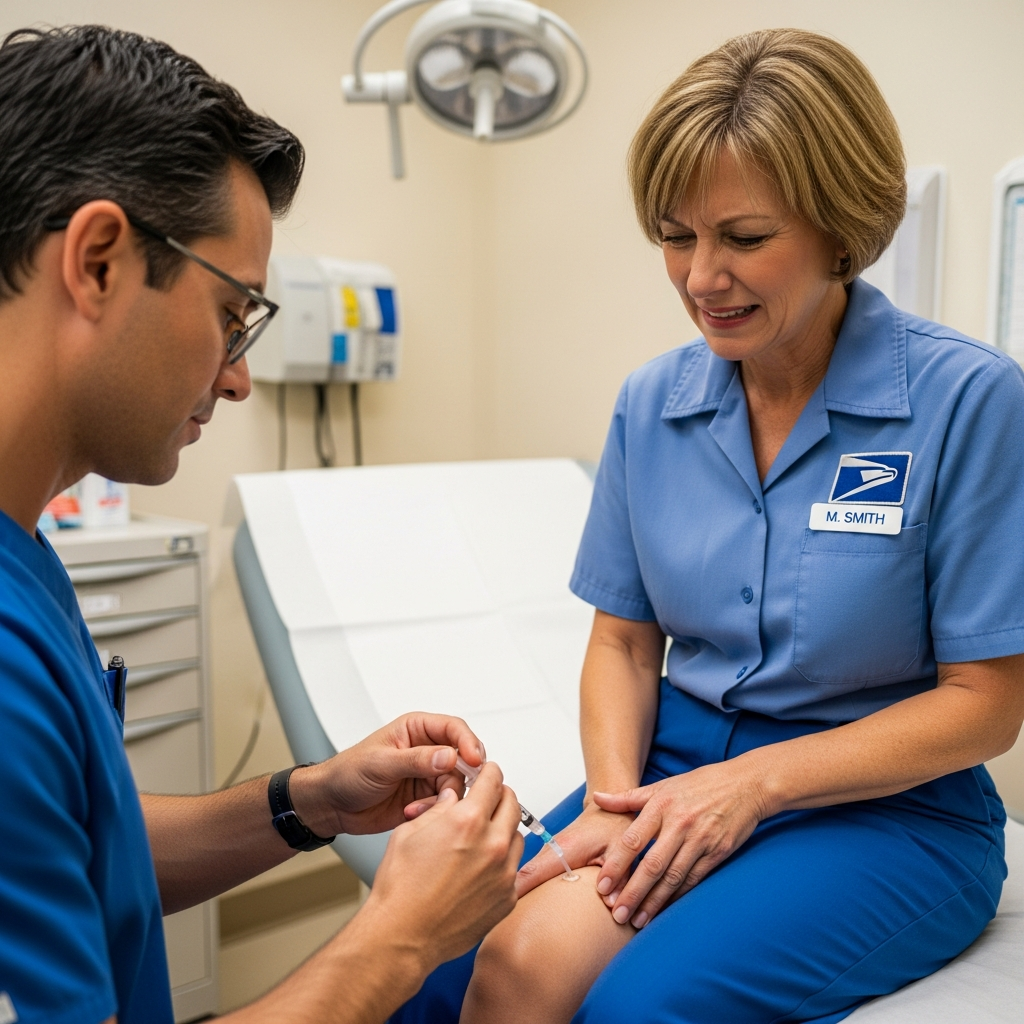
Car Accident Doctor Options for Federal Workers in Carmel

You’re running late for work – again – when the unthinkable happens. That split second when you realize the car ahead isn’t slowing down fast enough, or when someone blows through the red light you’re approaching. Your heart stops. Time stretches. Then… impact.
If you’re a federal worker in Carmel, that moment doesn’t just mean dealing with insurance claims and car repairs. It means navigating a whole different world of healthcare requirements that most people never have to think about. And honestly? It’s confusing as hell.
Here’s what nobody tells you about being a federal employee after a car accident: your healthcare options aren’t as straightforward as everyone else’s. While your coworker from the private sector can just waltz into any urgent care or see their family doctor, you’re sitting there wondering if the Federal Employees’ Compensation Act covers this, or if you should use your regular federal health insurance, or if there’s some other protocol you’re supposed to follow.
It’s like having a GPS that keeps recalculating – you know you need to get somewhere, but the route keeps changing.
The thing is, you’re not alone in this confusion. We see federal workers from agencies across the Indianapolis area who’ve been in accidents, and they all have that same deer-in-headlights look when trying to figure out their next steps. Some waited weeks to seek treatment because they weren’t sure which doctor to see or how to navigate the system properly. Others went to the wrong type of provider and ended up with claim denials or paperwork nightmares that dragged on for months.
That delay? It’s not just bureaucratic frustration – it can seriously impact your recovery. Car accident injuries are sneaky. What feels like minor soreness today can turn into chronic pain, headaches, or mobility issues if left untreated. Your body doesn’t care about government forms and approval processes. It needs care, and it needs it soon.
But here’s where it gets interesting – and this is something that might surprise you. Federal workers actually have some unique advantages when it comes to post-accident medical care, especially here in the Carmel area. You just have to know how to access them. The key is understanding which type of doctor to see based on your specific situation, how to properly document everything (trust me, documentation is everything), and how to coordinate between different systems without creating a paperwork disaster.
Think of it like this: you wouldn’t try to fix your car’s transmission with a screwdriver, right? Well, not all doctors are equipped to handle the specific needs of federal workers after car accidents. Some understand the unique requirements and can work seamlessly with federal programs. Others… well, let’s just say they might create more headaches than they solve.
And location matters more than you might think. Carmel’s position in the greater Indianapolis area means you’ve got access to specialists who regularly work with federal employees from various agencies – people who understand the ins and outs of federal worker compensation, know how to properly code treatments, and can actually help streamline the process instead of complicating it.
What we’re going to walk through together isn’t just a list of doctors (though you’ll definitely get that). We’re talking about understanding your rights as a federal employee, knowing exactly what questions to ask before you even walk into a medical office, and figuring out how to get the care you need without getting buried under bureaucratic red tape.
You’ll learn which types of injuries are most common after car accidents – some might surprise you – and more importantly, which specialists in the Carmel area actually know how to treat federal workers properly. We’ll also cover the timing issue… because yes, there are deadlines you need to know about, but they’re not as scary as they sound once you understand them.
By the time we’re done, you’ll have a clear roadmap for getting quality medical care after a car accident, whether it happened yesterday or you’re still dealing with lingering issues from something that happened months ago. Because honestly? You’ve got enough to worry about without adding “figure out the healthcare maze” to your list.
What Makes Federal Workers Different (And Why It Actually Matters)
You know how everyone assumes government jobs are all the same? Well, when it comes to car accident injuries, that’s… not exactly true. Federal workers in Carmel have this unique situation where they’re covered by specific programs that don’t quite work like regular health insurance or workers’ comp.
Think of it like being part of an exclusive club – except nobody really explained the membership benefits clearly. You’ve got the Federal Employees’ Compensation Act (FECA) if you’re injured on the job, plus your regular federal health benefits through FEHB. But here’s where it gets tricky… what happens when you’re driving to a work meeting and get rear-ended? Or when you’re heading home from the office and someone runs a red light?
The lines blur pretty quickly. And honestly? Most doctors’ offices don’t deal with federal cases often enough to know these nuances inside and out.
The Insurance Maze (Or: Why Your Head Might Be Spinning)
Let’s talk about something that trips up nearly everyone – even people who work in benefits administration. Federal workers typically have multiple layers of potential coverage, and figuring out which one applies when can feel like solving a Rubik’s cube blindfolded.
You’ve got your FEHB plan – that’s your regular health insurance. Then there’s FECA if the accident happened while you were on official business. Some folks also carry personal injury protection through their auto insurance. And if someone else caused the accident, their insurance might be on the hook too.
It’s like having four different keys to your house, but only one of them works for any given door… and you’re not sure which door you’re standing in front of.
Here’s what makes this particularly frustrating: the doctor you choose can actually impact which coverage kicks in and how smoothly your claims process goes. Not all medical providers are set up to handle federal programs properly – and trust me, you don’t want to find this out after you’ve already started treatment.
Why Location Matters More Than You’d Think
Carmel’s got this interesting dynamic going on. You’ve got federal workers commuting from all over the Indianapolis metro area, some working downtown, others at various federal facilities scattered around the region. The thing is, where you get treated can actually affect your options.
Some medical practices specialize in federal cases – they know the paperwork, understand the approval processes, and won’t look at you blankly when you mention OWCP (that’s the Office of Workers’ Compensation Programs, by the way). Others… well, let’s just say they might treat federal programs like an exotic language they studied briefly in college.
And here’s something counterintuitive: sometimes the closest urgent care isn’t your best bet. I mean, sure, if you’re seriously injured, get help immediately – location doesn’t matter when you’re dealing with an emergency. But for ongoing treatment and rehabilitation? You might want to drive a little further to find someone who really gets the federal system.
The Timing Puzzle
This is where things get really interesting (and by interesting, I mean potentially complicated). Federal injury claims have specific time limits – you can’t just wait six months and then decide to file. But here’s the catch: you might not immediately know whether your car accident qualifies for federal coverage.
Were you on your way to a required training session? Driving between work sites? Heading to lunch with a colleague to discuss a project? These details matter more than you might expect, and they’re not always crystal clear in the moment when you’re dealing with whiplash and a totaled car.
It’s like trying to solve a puzzle when you’re not even sure you have all the pieces yet. Which is exactly why having medical providers who understand these nuances becomes so valuable – they can help document things properly from the start, rather than trying to piece together the story later.
The reality is, most of us don’t think about these complexities until we’re in the middle of dealing with them. You’re focused on getting better, not becoming an expert in federal employment law. And that’s completely understandable – but it’s also why knowing your options upfront can save you headaches down the road.
Know Your Federal Benefits Inside and Out
Here’s something most federal workers don’t realize – you’ve got some serious advantages when it comes to post-accident medical care, but only if you know how to use them. Your Federal Employees’ Compensation Act (FECA) coverage? It’s actually more comprehensive than most private insurance plans. The catch is… well, there’s always a catch, isn’t there?
You need to file that CA-1 form within 30 days of your accident. Not 31 days. Not “when you get around to it.” Thirty days. Miss this window, and you’re looking at a mountain of paperwork to justify the delay. Trust me, I’ve seen too many federal employees learn this the hard way.
Finding Doctors Who Actually Understand Federal Claims
Not every doctor in Carmel knows how to navigate FECA claims – and honestly, some avoid them altogether because of the paperwork headache. You want physicians who are already in the federal system or have experience with it.
Start with the OWCP (Office of Workers’ Compensation Programs) provider directory. But here’s the insider tip: call the doctor’s office directly and ask to speak with their billing department. Ask point-blank: “How many FECA claims do you process monthly?” If they hesitate or give you a vague answer, keep looking.
Community Health Network and Franciscan Health both have locations in Carmel with providers experienced in federal workers’ comp cases. They’ve got the administrative infrastructure to handle the unique requirements – which means less stress for you when you’re already dealing with accident recovery.
The Second Opinion Strategy (They Won’t Tell You This)
Your FECA benefits allow for second opinions, and sometimes… you really need them. If you’re not getting the answers you need from your initial treating physician, don’t just grin and bear it. The federal system actually encourages thorough medical evaluation.
But here’s what’s interesting – you can request a second opinion from a different specialty if needed. Car accident injuries are sneaky things. What looks like a simple neck strain might involve nerve compression that requires a neurologist’s expertise, not just an orthopedist’s.
Document everything. I mean everything. That weird shoulder pain that started three days after the initial visit? Write it down. The headaches that seem worse in the afternoon? Note them. Federal claims live and die by documentation.
Timing Your Care Strategically
This might sound calculating, but timing matters more than you’d think. If your accident happened on a Friday, don’t wait until Monday to seek care unless it’s truly minor. Emergency room visits are covered under FECA, and starting your paper trail immediately shows the severity and urgency of your injuries.
However – and this is crucial – make sure you’re treated at a hospital that understands federal billing. St. Vincent Carmel and IU Health North both have experience with federal workers’ comp, which means smoother processing and fewer billing nightmares down the road.
The Carmel Advantage for Specialized Care
Carmel’s proximity to Indianapolis gives you access to specialized care that many smaller communities can’t offer. If you need advanced imaging, pain management, or specialized rehabilitation, you’re not stuck with limited local options.
The Orthopedic Institute has multiple Carmel locations and extensive experience with motor vehicle accident injuries. They understand that federal workers often need comprehensive documentation for their claims – something that’s not always a priority at smaller practices.
Managing the Administrative Maze
Here’s something nobody tells you: assign one person in your life to be your “FECA coordinator.” Whether it’s your spouse, adult child, or close friend, having someone who can track appointments, follow up on paperwork, and advocate for you when you’re not feeling your best is invaluable.
Keep copies of everything in both digital and physical formats. The federal system moves slowly, and documents have a way of getting “misplaced.” Your backup copies might be the difference between smooth processing and months of delays.
When to Escalate Your Care
If you’re not seeing improvement within the expected timeframe, don’t just accept “these things take time.” Push for additional diagnostic testing or specialist referrals. Federal workers’ comp covers necessary medical care – the key word being “necessary.”
If your current provider seems hesitant to order additional tests or referrals, it might be time to switch providers within the network. You have that right, and sometimes a fresh perspective makes all the difference in your recovery.
When Your Supervisor Acts Like They’ve Never Heard of Workers’ Comp
Here’s what nobody warns you about – your boss might suddenly develop amnesia when you mention filing a workers’ comp claim for your car accident. Even though you were clearly on official business, driving to that training in Indianapolis when some teenager rear-ended you at a red light.
The solution? Document everything. And I mean *everything*. That text from your supervisor asking you to attend the off-site meeting? Screenshot it. Your travel authorization? Make copies. The GPS showing your route was work-related? Save it. Think of yourself as building a paper trail that’s so obvious, even the most skeptical claims adjuster would have to admit you were doing your job.
Actually, that reminds me – get your supervisor’s acknowledgment in writing as soon as possible. A simple email saying “As discussed, I was traveling to the required safety training when the accident occurred” can save you months of headaches later.
The Medical Provider Maze That Makes You Want to Scream
You’d think finding a doctor would be straightforward, right? Wrong. Your workers’ comp insurer has their “preferred providers” – and surprise! – they’re usually booked solid for the next six weeks. Meanwhile, your neck feels like someone replaced your vertebrae with broken glass.
Here’s the workaround that actually works: call the workers’ comp case manager (yes, you’ll probably get voicemail) and explain that you need immediate care. Use the magic words “I’m experiencing worsening symptoms and need authorization for urgent care.” Most insurers have provisions for emergency treatment, but they won’t volunteer this information.
If you’re still stuck, head to an urgent care center that accepts workers’ comp and pay out of pocket if necessary. Keep every receipt – you can fight for reimbursement later. Your health trumps their bureaucratic timeline, always.
The Documentation Black Hole
Ever feel like you’re feeding papers into some cosmic void? You send forms, they get “lost.” You call for updates, they have no record of your case. It’s like your accident happened in an alternate dimension.
The fix is annoyingly simple but surprisingly effective – everything goes through email with delivery receipts, and you keep your own file. I’m talking about a physical folder (old school, I know) with copies of every single document. When they claim they never received your medical report, you can forward the email showing it was delivered at 2:47 PM on Tuesday.
Also – and this is crucial – get claim numbers, reference numbers, and the full names of everyone you speak with. That pleasant person who promised to expedite your case? Write down “Jennifer, ext. 4829, promised callback by Friday.” When Friday comes and goes… you know exactly who to ask for.
When “Independent” Medical Exams Feel Like Kangaroo Courts
Nothing quite prepares you for the surreal experience of being examined by a doctor whose job is basically to minimize your injuries. These “independent” medical exams (IMEs) can feel like elaborate theatrical productions designed to prove you’re faking it.
The secret weapon? Bring a witness if allowed, and document everything yourself. Note the doctor’s questions, how long they actually examined you (spoiler alert: probably less time than you spent in the waiting room), and any comments that seem dismissive or inappropriate.
Don’t try to be a hero during the exam, but don’t oversell your symptoms either. Just be honest about your limitations. If bending over to touch your toes makes you wince, let that show naturally. The goal isn’t to perform – it’s to give an accurate picture of your condition.
The Endless Phone Tag Championship
You call workers’ comp, they transfer you to medical management, who sends you to case review, who bounces you back to the main number. It’s like professional ping pong, except less fun and more soul-crushing.
Break the cycle by asking for direct numbers and extensions for specific departments. When someone helps you, get their direct contact information. Build your own little phone directory of people who actually know what they’re talking about.
And here’s a pro tip – call early in the morning or right after lunch. Avoid Mondays (everyone’s cranky) and Fridays (half the staff is already mentally at happy hour).
The truth is, navigating workers’ comp after a car accident shouldn’t require a law degree and the patience of a saint… but here we are.
What to Expect from Your First Visit
Walking into that first appointment, you’re probably wondering what you’ve gotten yourself into. Will they poke and prod? Ask a million questions? Here’s the thing – most car accident doctors are pretty systematic about this stuff, and for good reason.
Your initial visit will likely run 45 minutes to an hour. That’s not because they’re slow… it’s because they need to get the full picture. Think of it like a detective gathering clues. They’ll want to know everything – how the accident happened, where you felt pain immediately versus what showed up later, how you’re sleeping, whether you can still do your usual weekend activities.
You’ll probably fill out what feels like a novel’s worth of paperwork. Don’t rush through it. Those seemingly random questions about your mood or energy levels? They’re actually pretty important for understanding how the accident has affected your whole life, not just the obvious injuries.
The physical exam comes next, and honestly, it might feel a bit awkward if you’re not used to medical evaluations. They’ll check your range of motion, test your reflexes, maybe press on areas that hurt. It’s normal if some of this is uncomfortable – just speak up if something really bothers you.
Your Federal Benefits Timeline (The Real Deal)
Okay, let’s talk turkey about timing because… well, nobody likes surprises when it comes to paperwork and approvals.
If you’re using your Federal Employee Health Benefits (FEHB), you’re generally looking at pretty straightforward processing. Most claims get reviewed within 2-4 weeks, though complex cases can stretch longer. The good news? Federal benefits tend to be more comprehensive than a lot of private insurance when it comes to accident-related care.
Workers’ compensation claims – that’s a different beast entirely. We’re talking months, not weeks. The initial approval might come through in 4-6 weeks if everything’s straightforward, but don’t be shocked if it takes 8-12 weeks. And if there’s any question about whether your injury is work-related? Add more time.
Here’s what nobody tells you: the system isn’t designed for speed. It’s designed for thoroughness. Frustrating? Absolutely. But it also means when you do get approved, you’re typically covered pretty well.
Building Your Treatment Plan
Your doctor isn’t going to wave a magic wand and fix everything in three visits – though wouldn’t that be nice? Real recovery from car accident injuries is more like… well, like rehabbing a house after storm damage. Some things need immediate attention, others can wait, and some problems don’t show up until later.
Most treatment plans start conservatively. Physical therapy, maybe some medications for pain and inflammation. Your doctor might want to see how you respond before considering more intensive treatments. This isn’t them being cheap or lazy – it’s actually good medicine. Why do surgery if PT gets you back to normal?
The timeline? For minor soft tissue injuries, you might feel significantly better in 6-8 weeks. More serious issues – herniated discs, complex whiplash, multiple injury sites – can take months. I know, I know… not what you want to hear when you’re hurting right now.
Red Flags and When to Speak Up
Sometimes things don’t go according to plan, and you need to know when to raise your hand and say, “Hey, something’s not right here.”
If your pain is getting worse instead of better after a few weeks of treatment, that’s worth discussing. Not every twinge and ache – healing isn’t always linear – but significant increases in pain or new symptoms popping up.
Also, if you’re feeling like your doctor isn’t listening or seems to be rushing through appointments… trust that gut feeling. You’re not being dramatic. Good car accident doctors know this stuff takes time and attention.
Managing Expectations (And Your Sanity)
Here’s something they don’t put in the pamphlets: recovery from car accidents is messy. You’ll have good days and bad days. Sometimes you’ll feel great in the morning and terrible by afternoon.
That’s normal. Annoying, but normal.
Your body is basically recalibrating after being rattled around, and that process doesn’t follow a neat, predictable timeline. Some days you’ll wonder if you’re ever going to feel normal again. Other days you’ll feel so good you’ll consider canceling your next appointment (don’t do this, by the way).
The key is staying consistent with treatment and keeping realistic expectations. You’re not trying to get back to exactly where you were before – you’re trying to get to a new normal that lets you live your life fully.
You know, dealing with a car accident when you work for the federal government can feel like you’re caught between two complicated systems – and honestly, that’s because you kind of are. Between FECA paperwork, finding the right medical providers, and just trying to heal from your injuries… it’s a lot. More than a lot, actually.
But here’s what I want you to remember: you’re not alone in this, and you absolutely have options. The federal workers’ compensation system exists for exactly this reason – to protect you when life throws you a curveball like this. Sure, it might seem overwhelming at first (okay, it definitely seems overwhelming), but once you understand how to work within the system, it becomes much more manageable.
Finding Your Path Forward
The beauty of having multiple medical options in the Carmel area is that you get to choose what works best for your specific situation. Maybe you’re dealing with chronic back pain that needs a specialist’s touch, or perhaps you’re looking for that integrated approach that treats both your physical injuries and the stress that comes with them. Whatever your needs are – and trust me, they’re completely valid – there’s a provider out there who gets it.
I’ve seen federal employees worry that they’re being too demanding or asking for too much care. Can I tell you something? You’re not. You pay into this system, and when you need it, you deserve quality care that actually helps you get better. Not just “good enough” care, but the kind that helps you feel like yourself again.
The Ripple Effect of Good Care
Here’s something that might surprise you – when you get the right medical care after your accident, it doesn’t just help your body heal. It helps everything else fall back into place too. Your sleep improves, your mood lifts, you can focus better at work… it’s like that domino effect, but in reverse. One good decision (getting proper treatment) creates a cascade of positive changes.
And speaking of work – your colleagues, your supervisor, your whole federal agency? They want you back at 100% too. Taking care of yourself isn’t selfish; it’s actually the responsible thing to do.
You Don’t Have to Figure This Out Alone
Look, navigating medical care and workers’ comp paperwork while you’re hurt and stressed? That’s like trying to solve a puzzle while someone’s shining a bright light in your eyes. It’s unnecessarily difficult, and you shouldn’t have to do it by yourself.
If you’re feeling stuck or overwhelmed by your options – or even if you just want someone to walk through your situation with you – reach out to us. We work with federal employees all the time, and we understand both the medical side and the bureaucratic maze you’re dealing with. Sometimes just having someone explain your options clearly can make all the difference.
You’ve already been through enough. Let us help make this part easier. Give us a call, and let’s talk about what’s really going on and how we can help you get back to feeling like yourself again. Because that’s what this is all about, isn’t it? Getting back to your life.