
Home › Federal Workers' Comp
Federal Workers' Compensation Doctor in Indianapolis
If you were hurt doing your federal job, you are covered by the Federal Employees' Compensation Act — not by Indiana workers' comp, and not by your health insurance. We treat injured federal employees, bill the Department of Labor directly, and write the medical documentation your claim actually stands on.
Postal carriers, VA staff, TSA officers, BOP correctional officers, DoD civilians. More than 20 years of federal work comp cases from one office on Shadeland Avenue.

What is federal workers' compensation?
Federal workers' compensation is the benefit system created by the Federal Employees' Compensation Act (FECA), which covers civilian employees of the United States government who are injured or made ill by their job. It is administered by the Office of Workers' Compensation Programs (OWCP) at the U.S. Department of Labor, and it pays for medical treatment, lost wages, permanent impairment, and vocational rehabilitation.
It is a completely separate system from state workers' compensation. If you are a federal civilian employee in Indiana, the Indiana Worker's Compensation Act does not apply to your work injury — FECA does. Different forms, different deadlines, different rules about choosing your doctor. Advice about one does not transfer to the other.
People search for this system under a lot of names — federal workers comp, federal work comp, federal workman's comp, FECA, OWCP. They all refer to the same thing.
Sources on this page: the Federal Employees' Compensation Act (5 U.S.C. 8101 et seq.), the implementing regulations at 20 CFR Part 10, and the FECA Procedure Manual. This page is general information, not legal advice. Rules change — verify specifics with your OWCP district office.
What a chiropractor can treat and bill under FECA
Most clinics advertising federal work comp care do not tell you this. We would rather you hear it from us before your first appointment than from a claims examiner after a denial.
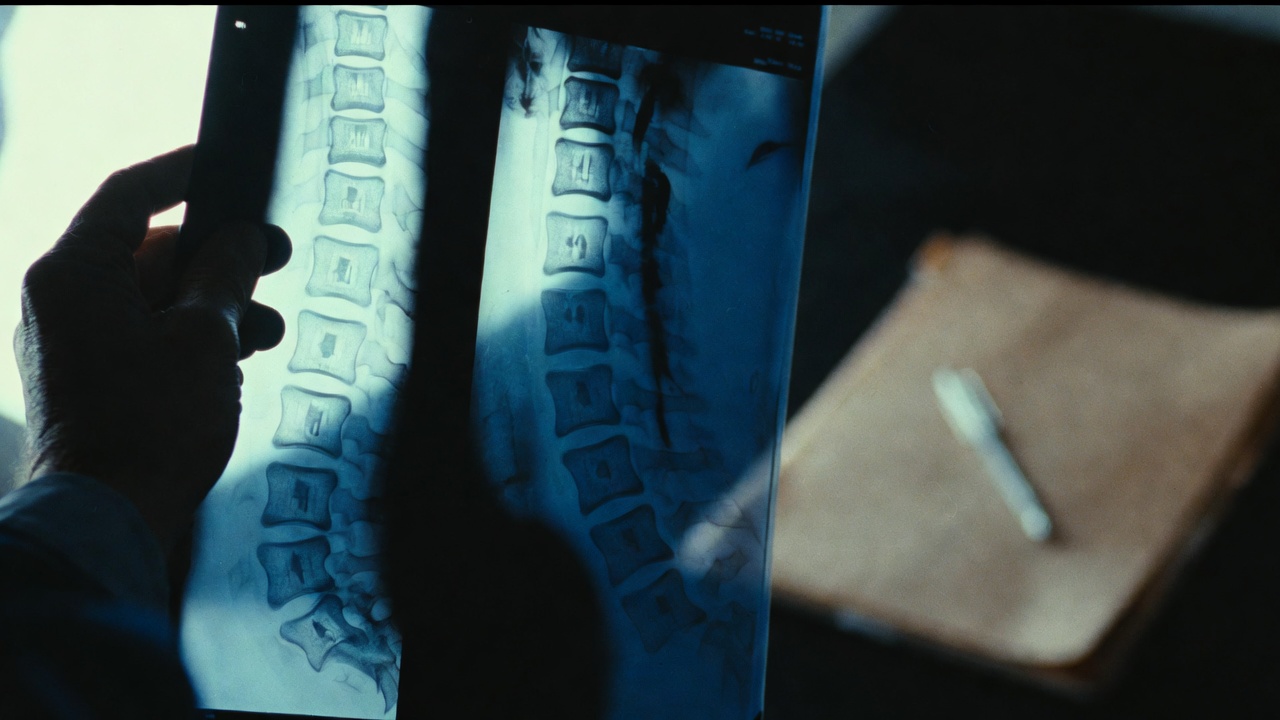
Under FECA, a chiropractor is a "physician" only for one specific purpose: manual manipulation of the spine to correct a subluxation demonstrated by X-ray to exist. That is the statutory language in 5 U.S.C. 8101(2), and 20 CFR 10.311 repeats it — the diagnosis of "subluxation as demonstrated by X-ray to exist" must appear in the chiropractor's report before OWCP can consider payment.
In practice that means three things for you:
X-ray is not optional
For OWCP to reimburse chiropractic treatment, imaging has to support a subluxation diagnosis and that diagnosis has to be stated in the report. A practice that skips the film is setting your claim up to fail at the billing stage.
Dr. Tolle reads his own films
The FECA Procedure Manual is explicit: a chiropractor "has the right to interpret his or her own X-rays to determine whether they support the diagnosis of subluxation and to determine any period of disability resulting from that condition." That authority over your disability period matters.
Outside that scope, you get referred
Surgical questions, nerve conduction studies, imaging beyond our capability, psychiatric care — these are outside chiropractic scope under FECA. We co-manage with MDs and DOs and refer out rather than stretching what we are permitted to bill.
| Term | What OWCP means by it |
|---|---|
| Subluxation | "An incomplete dislocation, off-centering, misalignment, fixation or abnormal spacing of the vertebrae." — FECA Procedure Manual |
| Physician | Includes surgeons, podiatrists, dentists, clinical psychologists, optometrists, chiropractors and osteopathic practitioners — with chiropractors limited as described above. — 5 U.S.C. 8101(2) |
| Reimbursable chiropractic service | "Limited by the FECA to treatment to correct a spinal subluxation." — 20 CFR 10.311(a) |
Why put this on a page meant to attract patients? Because the alternative is a patient who starts treatment, accrues bills, and then discovers OWCP will not pay for them. Knowing the boundary up front is how you avoid that. If your injury is not spinal, call anyway — we will tell you who to see.
Are you covered by federal workers' compensation?
FECA covers civilian employees of the federal government. It does not cover military service members on active duty, independent contractors, or private-sector workers.
| If you are… | You are covered by | Administered by |
|---|---|---|
| A federal civilian employee (USPS, VA, TSA, BOP, DoD civilian, IRS, SSA, FAA…) | FECA — federal workers' compensation | OWCP, U.S. Department of Labor |
| A private-sector Indiana worker | Indiana Worker's Compensation Act | Worker's Compensation Board of Indiana |
| An active-duty service member | Not FECA — military medical and disability systems | DoD / VA |
| An independent contractor to a federal agency | Generally not FECA | Depends on the contract and state law |
| A federal employee hurt off duty | Not FECA — your FEHB health plan | Your insurer |
The injury also has to be work-related — it must arise out of and in the course of your federal employment. That covers a single traumatic event, an occupational disease that built up over years, and the aggravation of a pre-existing condition by your federal duties.
What federal workers' compensation actually pays for
FECA is broader than most injured federal employees realize. These are the benefit categories, with the statutory figures.
| Benefit | What it covers | Amount / limit |
|---|---|---|
| Medical treatment | All services, appliances and supplies a qualified physician prescribes that OWCP considers necessary to treat the accepted condition (20 CFR 10.310) | $0 to you on an accepted claim |
| Continuation of pay (COP) | Your regular salary continues after a traumatic injury while the claim is adjudicated. Traumatic injury only — not occupational disease. | Up to 45 days (5 U.S.C. 8118) |
| Wage-loss compensation | Paid after COP is exhausted, or where COP does not apply, while you cannot earn your pre-injury wage | 66⅔% of monthly pay, or 75% with a dependent (5 U.S.C. 8105, 8110) |
| Schedule award | Compensation for permanent impairment of a listed body part — arm, leg, hand, eye, hearing and others — payable even if you return to work | Set number of weeks by body part |
| Vocational rehabilitation | Retraining and placement assistance if you cannot return to your prior position | As authorized by OWCP |
| Travel to treatment | Reasonable and necessary expenses of getting to authorized medical care (20 CFR 10.315) | Reimbursed |
| Survivor benefits | Compensation to eligible dependants where a work injury or illness causes death | By statute |
Nothing on an accepted OWCP claim goes to your health insurance, and nothing goes to you. Authorized treatment is billed directly to the Department of Labor. If a provider is asking you to pay up front or billing your FEHB plan for an accepted work injury, something is wrong.
Federal work injuries we treat in Indianapolis
Two decades of federal cases produces a fairly specific caseload. These are the injuries that walk through the door.
Lumbar and cervical disc injury
The most common federal work injury we see. Lifting, carrying, casing mail, patient handling, repetitive bending. Disc herniation, bulge, radiculopathy and the spinal subluxation that FECA specifically authorizes chiropractic treatment for.
Repetitive strain and cumulative trauma
Occupational disease claims built over years rather than one bad shift — the CA-2 side of the system. Scanning, sorting, keyboard work, standing posts. These claims live or die on causal medical evidence.
Shoulder, knee and joint injury
Rotator cuff, meniscus, sprains and strains from lifting and from falls on federal property. We document these and co-manage with orthopedics where the case needs surgical opinion.
Nerve pain, neuropathy and CRPS
A particular focus of this practice. Peripheral neuropathy and Complex Regional Pain Syndrome following a work injury, treated with Calmare® Scrambler Therapy, Piezowave2® shockwave and infrared therapy. Federal employees are referred here from well outside the metro for this.
Aggravation of a pre-existing condition
You do not lose coverage because you had a bad back before. If federal duties made it worse, that aggravation is compensable — but it has to be documented as an aggravation, which is where a lot of claims fall apart.
Slip, trip and fall injuries
Ice on a route, a wet floor in a facility, a loading dock. Traumatic injuries filed on a CA-1, where fast reporting protects your continuation of pay.
Traumatic injury or occupational disease?
Which one you have determines the form, the benefits available to you immediately, and how hard the medical evidence has to work. Getting this wrong at the start costs months.
| Traumatic injury | Occupational disease | |
|---|---|---|
| What happened | A single event or exposure within one work shift | A condition that developed over more than one shift |
| Form | CA-1 | CA-2 |
| Continuation of pay | Yes — up to 45 days | No |
| CA-16 available | Yes, from your supervisor | Rarely |
| Typical example | Lifting a tub and feeling your back go; slipping on ice on a route | Shoulder degeneration after twelve years of casing mail; hearing loss; carpal tunnel |
| Evidence burden | Lower — the event is discrete and usually witnessed | Higher — needs a reasoned medical opinion tying the condition to specific duties over time |
Either way you have three years from the date of injury to file, or from the date you became aware the condition was work-related for an occupational disease (5 U.S.C. 8122). Do not rely on the outer limit — report immediately and file promptly, because separate and much shorter timeframes govern continuation of pay.
Full walkthrough of the OWCP claim process, forms and deadlines →
Your first week after a federal work injury
Report it to your supervisor immediately, in writing
Today if possible. Late reporting is the most common and most avoidable problem in a federal claim, and for a traumatic injury it is what preserves your continuation of pay.
Ask your supervisor for a Form CA-16 — and ask this week
A CA-16 guarantees payment to the treating provider for 60 days from the date of injury, whether or not your claim has been adjudicated yet. DOL training guidance tells supervisors to complete it within four hours of your request — and also permits them to refuse if more than about a week has passed, on the reasoning that the need for immediate treatment would have been apparent by then. That window is short. Ask now.
Choose your own treating physician
You make the initial selection. Your agency can send you for an initial examination, but it does not pick your ongoing treating physician. Choose carefully, because switching later requires written approval from OWCP under 20 CFR 10.316.
File the right form through ECOMP
CA-1 for a traumatic injury, CA-2 for an occupational disease, at ecomp.dol.gov. Your agency then completes its portion. We are not a government agency and cannot file for you, but we will walk you through it.
Get evaluated and documented properly from day one
This is the part people underestimate. An OWCP claims examiner never meets you — they read a file. The medical narrative has to draw an explicit, reasoned line between your diagnosis and specific duties you performed. Documentation written correctly at the outset beats documentation rewritten after a development letter.
Looking for a federal workers' comp doctor near you in Central Indiana?
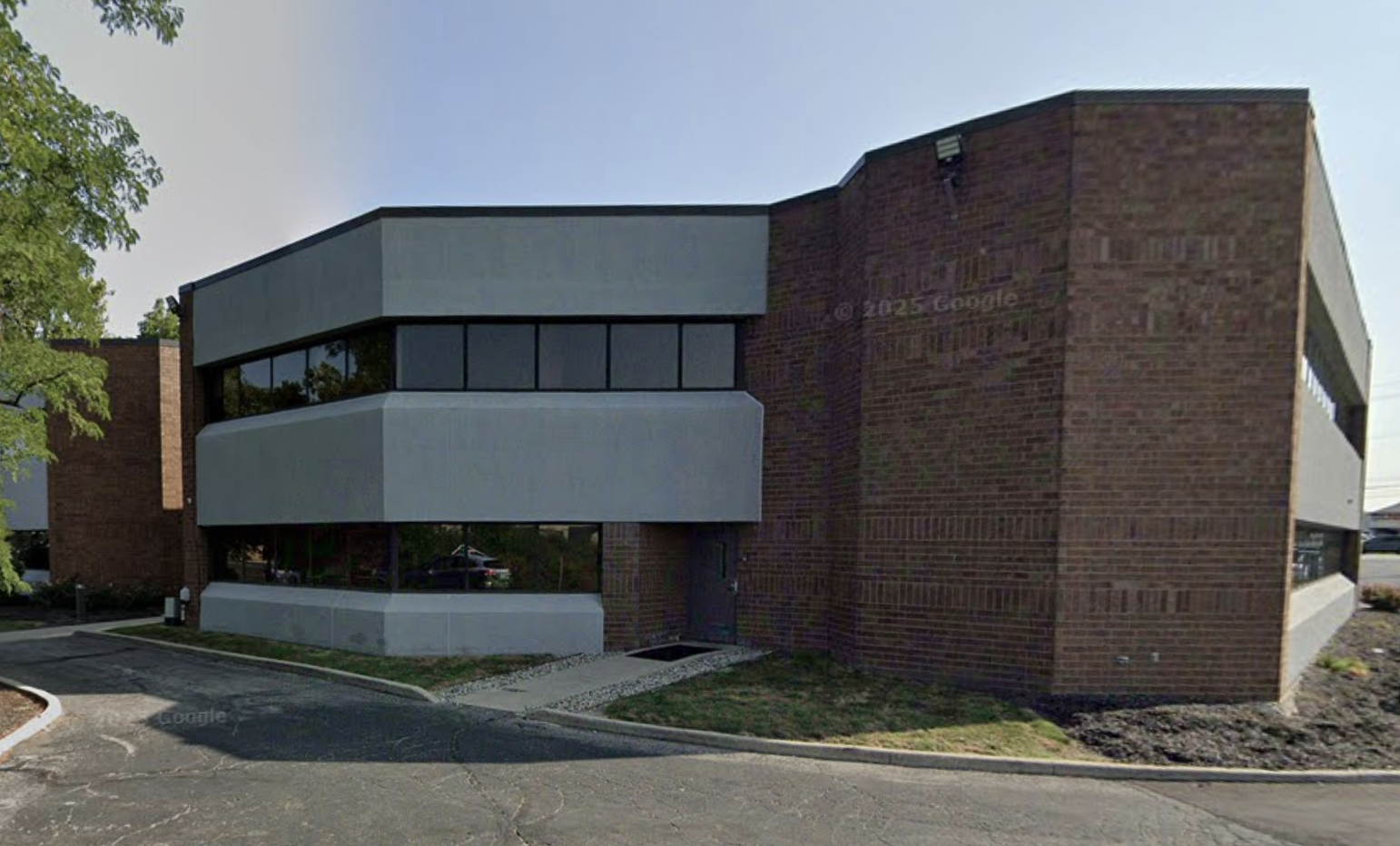
Our office is at 7430 Shadeland Ave #230, on Floor 1 of the Shadeland Medical Center on the northeast side of Indianapolis. It is the only DOL Doctors Indiana location.
From there we are roughly fifteen minutes from Fishers and Carmel via I-465 and I-69, and about twenty from Noblesville and Lawrence. Federal employees also travel in from Westfield, Zionsville, McCordsville, Greenwood, Avon, Plainfield, Brownsburg, Greenfield and Anderson.
Federal facilities across the metro send patients here — postal processing and delivery units, the VA, TSA posts at the airport, federal office buildings downtown, and Department of Defense civilian sites around Marion and Hamilton counties.
- One location, one physician, consistent records across your claim
- Free parking on site
- Accepted OWCP claims billed direct to the Department of Labor
- CA-16, CA-17 and CA-20 completed in-house
| Monday | 9:00 AM – 6:00 PM |
| Tuesday | 9:00 AM – 2:00 PM |
| Wednesday | 9:00 AM – 6:00 PM |
| Thursday | 9:00 AM – 6:00 PM |
| Friday – Sunday | Closed |
Injured federal workers from every agency
U.S. Postal Service
Letter carriers, mail handlers, clerks, maintenance. The single largest group of FECA claimants nationally, and our largest caseload.
Veterans Affairs
Nurses, technicians and support staff — patient-handling and lifting injuries, cumulative trauma.
TSA, FAA and DOT
Screening officers and transportation personnel — lifting, repetitive strain, standing-post injuries.
Bureau of Prisons
Correctional officers — acute traumatic injury from incidents and the musculoskeletal wear of the post.
Department of Defense civilians
Civilian DoD personnel at Indiana installations — industrial, warehouse and office-ergonomic injuries.
IRS, SSA and other agencies
Federal office staff across the metro — ergonomic injury, slip-and-fall, aggravation of pre-existing conditions.
Dr. Terry J. Tolle, DC

Dr. Tolle has practiced chiropractic in Central Indiana for more than twenty years, and holds Indiana license 08001559A.
For most of that time the core of his work has been federal. He knows what a claims examiner reads first, why a "rationalized medical opinion" is a term of art rather than a formality, and how a CA-17 duty status report either protects your job or quietly costs it. He is also precise about the scope limits described above — which is why the documentation holds up.
- Doctor of Chiropractic — licensed in Indiana, license 08001559A
- NPI — 1124131826
- 20+ years of federal workers' compensation and OWCP cases
- Indiana State Chiropractic Association — former Board of Directors
- Certified Indiana provider: RingDinger®, Calmare® Therapy, Piezowave2®
- Author — Healing Your Nerves Naturally
4.9 stars across 189 Google reviews
The Calmare treatment center has been so good to me and my injury. They genuinely care about people and provide excellent treatment. The staff is exactly what you want when you require physical therapy for any on the job injury. They're so helpful and knowledgeable and always eager to help you with whatever you may need during treatment.
Reziel C. · Google
Dr. Tolle is the best. Very knowledgeable. I can't recommend highly enough.
Andy L. · Google
I have been coming here since February. The staff is wonderful! Everyone goes above and beyond and everyone is very friendly! I would highly recommend!
Rebecca R. · Google
Federal workers' compensation questions
What is the difference between federal workers' comp and regular workers' comp?
They are entirely separate systems. Federal civilian employees are covered by the Federal Employees' Compensation Act, administered by OWCP at the U.S. Department of Labor. Private-sector and most state and local employees in Indiana are covered by the Indiana Worker's Compensation Act, administered by the Worker's Compensation Board of Indiana. Different forms, different deadlines, different rules on choosing a physician, different appeal routes. A provider who is fluent in one is not automatically competent in the other — and most Indiana clinics only ever see the state system.
Can I choose my own federal workers' compensation doctor?
You make the initial selection of your treating physician. Your employing agency can direct you to an initial examination after an injury, and OWCP can require you to attend a second-opinion or referee examination that it schedules, but neither of those replaces the treating physician you chose. Choose deliberately: changing physicians afterwards requires written approval from OWCP under 20 CFR 10.316.
Is there a federal workers' comp doctor near me in Indianapolis?
DOL Doctors Indiana is at 7430 Shadeland Ave #230, Indianapolis, IN 46250, on the northeast side. It is roughly fifteen minutes from Fishers and Carmel via I-465 and I-69, and we see federal employees from across Marion and Hamilton counties — Noblesville, Westfield, Zionsville, Lawrence, McCordsville and further out. Call (317) 991-5710. Note that under FECA you are not limited to providers near your home or duty station; you choose your treating physician.
How much does federal workers' comp pay while I'm off work?
After a traumatic injury, continuation of pay keeps your regular salary running for up to 45 days (5 U.S.C. 8118). After that — or from the start, for an occupational disease, which does not get COP — wage-loss compensation is 66⅔% of your monthly pay, rising to 75% if you have at least one dependent (5 U.S.C. 8105 and 8110). Those are the statutory rates; what you actually receive depends on your pay rate and how OWCP has accepted your claim.
Can a chiropractor be my doctor for a federal work injury?
Yes, within a specific limit. FECA defines a chiropractor as a "physician" only to the extent that reimbursable services are manual manipulation of the spine to correct a subluxation demonstrated by X-ray to exist (5 U.S.C. 8101(2), 20 CFR 10.311). That diagnosis has to appear in the chiropractor's report before OWCP will consider payment. A chiropractor may interpret his or her own X-rays for that purpose and determine the resulting period of disability. Conditions outside that scope need an MD or DO, and we refer rather than overreach. We would rather explain this before your first visit than have you discover it through a denied bill.
Do I pay anything out of pocket for federal workers' compensation treatment?
On an accepted OWCP claim, no. Authorized treatment for the accepted condition is billed directly to the Department of Labor — not to you, and not to your FEHB health plan. If your agency has issued a Form CA-16, payment to the treating provider is guaranteed for 60 days from the date of injury even before your claim is adjudicated.
What is a CA-16 and how do I get one?
Form CA-16 is an authorization for examination and treatment issued by your employing agency. It guarantees payment to the treating physician — and to any physician you are referred to — for 60 days from the date of injury, unless OWCP terminates that authority earlier. Your supervisor can generate it once they complete their portion of the CA-1 in ECOMP, and DOL guidance tells them to complete it within four hours of your request. Ask quickly: supervisors are permitted to decline if more than roughly a week has passed since the injury.
How long do I have to file a federal work comp claim?
Generally three years from the date of injury, or from the date you became aware that your condition was work-related in the case of an occupational disease (5 U.S.C. 8122). There are exceptions where your supervisor had actual knowledge within 30 days or written notice was given in that window. Do not plan around the three-year limit — continuation of pay and other protections depend on reporting and filing promptly.
My federal workers' compensation claim was denied. Is that the end of it?
No. You generally have several routes after an adverse decision, each with its own deadline: reconsideration with new evidence, a hearing or review of the written record through the Branch of Hearings and Review, or an appeal to the Employees' Compensation Appeals Board. In our experience most denials we review are documentation failures rather than medical ones — typically a missing rationalized medical opinion connecting the diagnosed condition to specific federal duties. That is a fixable problem. Read your decision letter carefully, mind the deadlines, and consider speaking with a FECA attorney.
Does federal workers' comp cover an injury that made an old problem worse?
Yes. Aggravation of a pre-existing condition by federal duties is compensable. The catch is evidentiary: the medical report has to distinguish the aggravation from the underlying condition and tie the worsening to your work. Claims like this are denied far more often for vague documentation than for lack of merit.
Will my agency find out what I discuss with my doctor?
Your agency and OWCP receive the reports required to adjudicate and administer your claim — the CA-17 duty status report, the CA-20 attending physician's report, and narrative reports OWCP requests. They do not receive unrelated medical history. If you have a specific privacy concern, raise it at your consultation and we will tell you exactly what goes where.
Is the consultation really free?
Yes — no cost and no obligation. We use it to understand your injury, review your claim status and any forms already filed, and tell you honestly whether we are the right practice for your case. Given the scope limits described on this page, sometimes the honest answer is that you need a different kind of provider. We will say so and point you somewhere useful.
Talk to a federal workers' comp doctor in Indianapolis
Whether your claim is new, stalled or denied, we will review where it stands, explain your options, and tell you honestly whether we are the right practice for your case.
- No cost and no obligation
- Accepted claims billed to the Department of Labor
- CA-16, CA-17 and CA-20 completed in-house
- Denied and stalled claims reviewed
Prefer to talk? Call (317) 991-5710
Where to go next
This page covers the system and the care. Two other pages go deeper on the pieces around it.
OWCP & DOL doctors in Indiana
What "DOL doctor" and "OWCP doctor" actually mean, whether the Department of Labor certifies them (it does not), your right to choose, and how to vet a provider before you commit.
OWCP claims in Indianapolis
The claim itself — every form, the filing sequence through ECOMP, deadlines, development letters, denials and appeals.
DOL Doctors Indiana
7430 Shadeland Ave #230
Indianapolis, IN 46250
Floor 1 · Shadeland Medical Center
Office Hours
- Monday9:00 AM – 6:00 PM
- Tuesday9:00 AM – 2:00 PM
- Wednesday9:00 AM – 6:00 PM
- Thursday9:00 AM – 6:00 PM
- FridayClosed
- SaturdayClosed
- SundayClosed
DOL Doctors Indiana is a private medical practice and is not affiliated with, endorsed by, or an agency of the U.S. Department of Labor. Information on this page is general in nature and is not medical or legal advice. Rules and deadlines change — verify specifics with your OWCP district office or a FECA attorney. Individual results vary.