
Home › Personal Injury
Personal Injury & Auto Accident Doctor in Indianapolis
Hurt in a crash, a fall, or on someone else's property? Get evaluated now — not when the pain gets worse. We treat the injury and we document it to the standard insurers and attorneys actually require.
Letters of protection accepted, so treatment can start before your case resolves. Free consultation, no obligation.

What does a personal injury doctor do?
A personal injury doctor evaluates and treats injuries caused by an accident someone else is responsible for — and documents those injuries to the evidentiary standard that insurance adjusters and personal injury attorneys require. The treatment is ordinary clinical care. The documentation is what makes it a personal injury practice.
Those are two different jobs, and most clinics only do the first. An adjuster evaluating your claim will never examine you. They read records. If the records do not connect your diagnosis to the crash, describe the mechanism, and track your functional limits over time, the claim gets valued as though the injury were minor — regardless of how you actually feel.
People search for this under a lot of names: auto accident doctor, car accident injury clinic, personal injury chiropractor, accident injury doctor near me. It is the same thing.
We are a medical practice, not a law firm. Nothing on this page is legal advice, and we do not represent you in a claim. Indiana law statements below are cited to the Indiana Code — for how the law applies to your situation, talk to a personal injury attorney.
What to do in the first 72 hours after a crash
The decisions you make this week shape both your recovery and your claim. Most of them are simple, and most people get at least one wrong.
Get evaluated even if you feel fine
Adrenaline masks injury for hours to days, and soft-tissue and disc injuries characteristically present late. "I felt OK at the scene" is the single most common sentence we hear from people whose neck seized up on day three — and it is the sentence an adjuster will quote back at you.
Report the accident and get the report number
A police report or incident report creates the contemporaneous record of what happened. Get the number and keep it. Photograph the vehicles, the scene and any visible injuries while they are fresh.
Notify your own insurer — carefully
You generally have a contractual duty to report the accident to your own carrier promptly. That is different from giving a recorded statement to the other driver's insurer, which you are usually under no obligation to do. Talk to an attorney before that call.
Start treatment and do not stop and start
Consistent care from the outset is both better medicine and better evidence. Every unexplained gap in your record is an argument that you recovered and then hurt yourself some other way.
Keep every document
Bills, mileage to appointments, time off work, out-of-pocket costs, and a short daily note on what you could not do that day. Those notes are surprisingly persuasive later and impossible to reconstruct from memory.
Why waiting quietly destroys a claim
Two numbers decide how an adjuster values a soft-tissue injury claim before anyone discusses money: how long you waited to be seen, and whether your treatment has gaps in it.
The delay argument
If you were seen three weeks after the crash, the file supports an argument that something else caused the injury in the meantime. It may be completely untrue. It is still the argument, and it is made from your own records.
The gap argument
Six weeks of care, a two-month gap, then more care reads as "recovered, then re-injured." If life genuinely got in the way — work, childcare, transport — tell us, so the reason is in the record rather than inferred from a blank space.
The "no objective findings" argument
Pain is real but invisible. Range-of-motion measurements, orthopaedic and neurological testing and imaging where indicated turn a subjective complaint into documented findings that change over time.
None of this is a reason to over-treat, and we will not keep you in care longer than the injury warrants — a record padded with unnecessary visits is its own credibility problem. The goal is an accurate record of a real injury, created as it happens.
Accident injuries we treat
Whiplash and cervical strain
The classic rear-end injury. Neck pain, headaches, restricted rotation, sometimes radiating into the shoulder and arm. Frequently dismissed as minor and frequently not — persistent symptoms at six weeks warrant proper imaging and workup.
Disc injury — cervical and lumbar
Herniation, bulge and radiculopathy from the compressive and rotational forces of a collision. This is where Y-Axis Manual Spinal Decompression is most often indicated, and where imaging matters most to a claim.
Post-concussive symptoms
Headache, fog, light and noise sensitivity, sleep disruption and irritability after a head impact or violent movement — you do not have to lose consciousness. We screen for this, document it, and refer to neurology where the picture warrants it.
Shoulder, knee and joint injury
Rotator cuff and meniscal injury from bracing against the wheel or from a fall. We document these and co-manage with orthopaedics where a surgical opinion is needed.
Low back and sacroiliac injury
Lumbar sprain, facet injury and SI dysfunction — the most common ongoing complaint after both crashes and falls, and the most commonly under-documented.
Post-traumatic nerve pain and CRPS
A particular focus of this practice. Neuropathic pain and Complex Regional Pain Syndrome following trauma, treated with Calmare® Scrambler Therapy, Piezowave2® shockwave and infrared therapy. Patients are referred here for this from well outside the metro.
Car, truck, slip-and-fall and more
Car and auto accidents
Rear-end, intersection, and single-vehicle collisions across the Indianapolis metro. Most of our personal injury caseload. Low-speed impacts still produce real injury — property damage is a poor proxy for how hurt you are, even though adjusters use it as one.
Truck and commercial vehicle accidents
Collisions with semis, box trucks and commercial fleets involve far greater forces and usually a commercial insurer with counsel involved from day one. Documentation standards are correspondingly higher.
Slip, trip and fall
Falls on commercial or residential property — wet floors, ice, uneven surfaces, poor lighting. Premises cases turn heavily on prompt medical documentation, because unlike a crash there is often no police report establishing that anything happened.
Rideshare, pedestrian and cyclist
Uber and Lyft collisions bring layered commercial policies; pedestrian and cyclist injuries tend to be more severe and more disputed. Both benefit from early, thorough documentation.
Non-federal workplace injury
Hurt at work for a private Indiana employer? That runs through the Indiana Worker's Compensation Act, a different system again. Federal employees are covered by FECA — see our federal workers' compensation page.
Need an attorney?
We do not provide legal advice and we are not a referral service, but we work alongside personal injury attorneys across the metro every week and can point you toward firms that handle cases like yours.
How you pay — and why it usually isn't out of pocket
The most common reason people delay treatment after a crash is money. In most Indiana personal injury cases it should not be the obstacle it appears to be.
| Route | How it works | Out of pocket now? |
|---|---|---|
| Letter of protection (LOP) | Your attorney signs a commitment that our bill is paid out of your eventual settlement or award. Treatment starts immediately. | No |
| Medical payments coverage (MedPay) | Optional coverage on your own auto policy that pays accident medical bills regardless of who was at fault. Many Indiana drivers have it and do not realise it — check your declarations page. | No |
| Third-party liability claim | The at-fault driver's insurer pays — but typically only at settlement, in one lump sum at the end. It does not fund treatment along the way. | Not directly |
| Health insurance | Your health plan covers treatment and may later assert a lien or subrogation claim against your settlement. | Copay / deductible |
| Uninsured / underinsured motorist | Your own coverage responds when the at-fault driver has no insurance or not enough. Not mandatory in Indiana, but it is included by default — declining it requires a written waiver, so check whether you actually did. | No |
| Self-pay | Available, and sometimes the simplest route for a short course of care. | Yes |
We will tell you at the free consultation which of these applies to your situation before you commit to anything. If a letter of protection is the right route, we will coordinate it with your attorney directly.
Four things about Indiana law worth knowing
Not legal advice — we are a medical practice. But these four shape how much time you have and what your claim is worth, and people are routinely surprised by them.
| Rule | What it means | Source |
|---|---|---|
| Two years to file | An action for injury to person or character "must be commenced within two (2) years after the cause of action accrues." Miss it and the claim is generally gone regardless of merit. | IC 34-11-2-4 |
| Indiana is an at-fault state | Not a no-fault state. Whoever is responsible for the crash — through their insurer — is responsible for the resulting losses. That makes proving causation central rather than incidental. | Indiana tort law |
| Comparative fault, with a bar | Your damages are reduced by your share of the blame — and you recover nothing at all if your contributory fault is "greater than the fault of all persons whose fault proximately contributed" to your damages. Commonly called the 51% bar. | IC 34-51-2-6 |
| UM/UIM is opt-out, not opt-in | Uninsured and underinsured motorist coverage is not mandatory in Indiana, but it is included unless you declined it in writing. If you were hit by an uninsured driver, check your policy before assuming you have no coverage. | Indiana insurance law |
Deadlines differ for claims against government entities, for minors, and in several other situations, and the accrual date is not always the accident date. If any of that might apply, speak with a personal injury attorney early rather than late.
Working with your attorney
If you have counsel, we work to their requirements. If you do not, nothing here requires you to get one.
Records and narratives on request
Complete treatment records, itemised billing and narrative reports describing mechanism, diagnosis, causation and prognosis — in the format your attorney's office asks for, sent when they ask for it.
Letters of protection
We accept them, which lets treatment begin immediately rather than waiting for a settlement that may be a year away.
Objective, measurable findings
Range of motion, orthopaedic and neurological testing, functional limits tracked across visits. Adjusters discount narrative pain reports; they have a harder time discounting measurements that move.
Honest assessments, including unwelcome ones
If findings do not support the severity claimed, our records will say so. That is not a service failure — an inflated record is the fastest way to lose credibility at exactly the moment it matters.
We do not pay for referrals and we do not accept payment for making them. If we suggest attorneys, it is because we have seen their work on cases like yours.
An accident injury clinic near you in Indianapolis
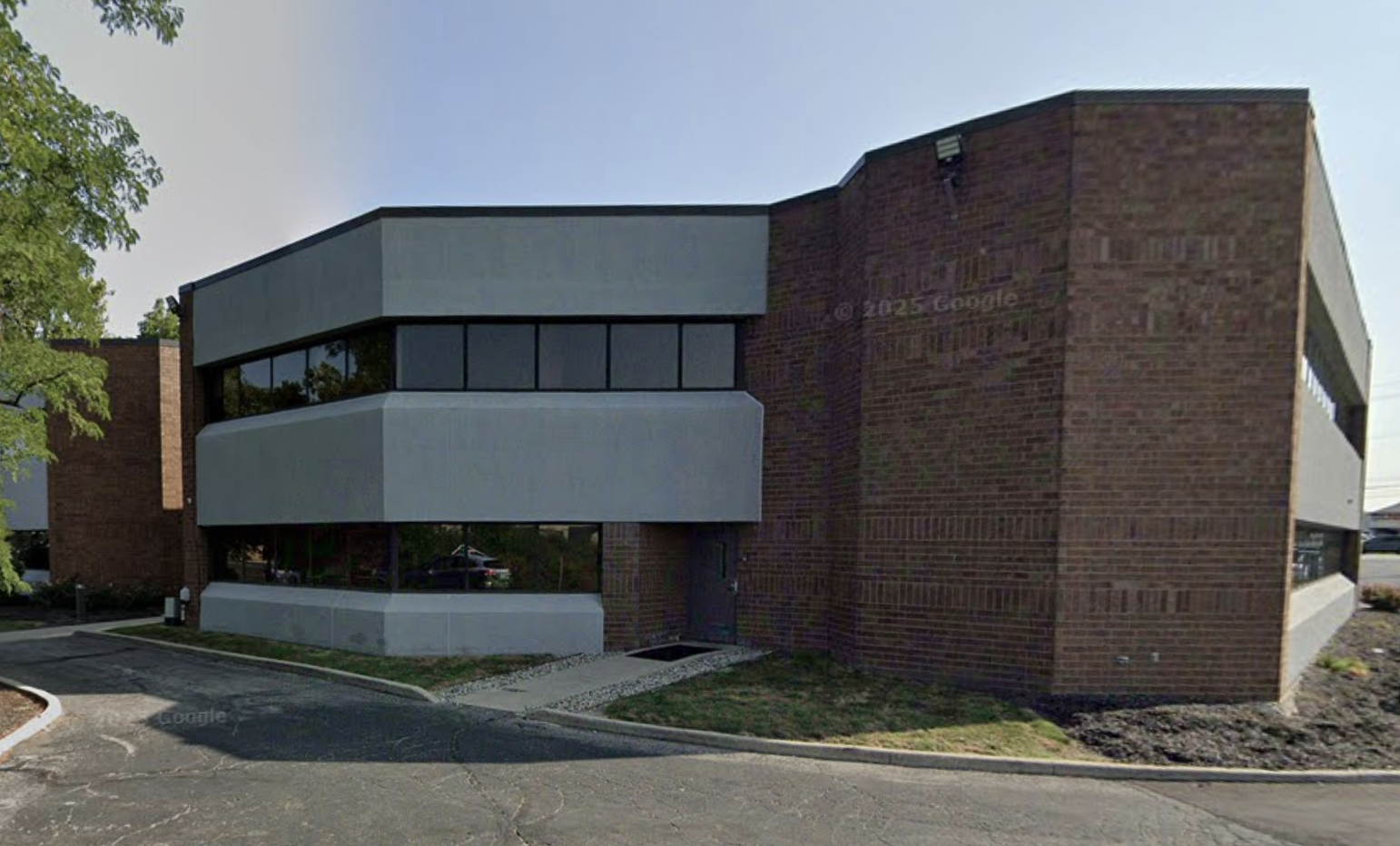
We are at 7430 Shadeland Ave #230, Floor 1 of the Shadeland Medical Center on the northeast side of Indianapolis.
About fifteen minutes from Fishers and Carmel via I-465 and I-69, and twenty from Noblesville and Lawrence. We also see accident patients from Westfield, Zionsville, McCordsville, Castleton, Geist, Greenwood, Avon, Plainfield, Brownsburg, Greenfield and Anderson.
If you are searching for a car accident injury clinic near me or a personal injury chiropractor near me, proximity genuinely matters here — a course of care means repeat visits, and a clinic you can actually get to is a clinic you will not develop gaps with.
- Free parking on site
- Letters of protection accepted
- Records and narratives supplied to your attorney on request
- Free consultation with no obligation
| Monday | 9:00 AM – 6:00 PM |
| Tuesday | 9:00 AM – 2:00 PM |
| Wednesday | 9:00 AM – 6:00 PM |
| Thursday | 9:00 AM – 6:00 PM |
| Friday – Sunday | Closed |
Dr. Terry J. Tolle, DC

Dr. Tolle has practiced chiropractic in Central Indiana for more than twenty years, and holds Indiana license 08001559A.
Two decades of writing medical documentation that gets read by people looking for reasons to discount it — insurers, adjusters, claims examiners — produces a particular discipline about records. That discipline is the same whether the payer is an auto insurer or the Department of Labor.
He is known regionally for Y-Axis Manual Spinal Decompression (the Ring Dinger®), trained under Dr. Gregory Johnson in Houston, and for post-traumatic nerve pain work using Calmare® Scrambler Therapy and Piezowave2® shockwave.
- Doctor of Chiropractic — licensed in Indiana, license 08001559A
- NPI — 1124131826
- Indiana State Chiropractic Association — former Board of Directors
- Certified Indiana provider: RingDinger®, Calmare® Therapy, Piezowave2®
- Author — Healing Your Nerves Naturally
4.9 stars across 189 Google reviews
The Calmare treatment center has been so good to me and my injury. They genuinely care about people and provide excellent treatment. The staff is exactly what you want when you require physical therapy for any on the job injury. They're so helpful and knowledgeable and always eager to help you with whatever you may need during treatment.
Reziel C. · Google
Dr. Tolle is the best. Very knowledgeable. I can't recommend highly enough.
Andy L. · Google
I have been coming here since February. The staff is wonderful! Everyone goes above and beyond and everyone is very friendly! I would highly recommend!
Rebecca R. · Google
Personal injury questions
How soon after a car accident should I see a doctor?
Within 72 hours, and sooner if you have any red-flag symptoms — severe headache, numbness or weakness, loss of consciousness, vision changes, or escalating neck or back pain. Adrenaline masks injury for hours to days and soft-tissue and disc injuries typically present late, so feeling fine at the scene means very little. Delay also gives an insurer a straightforward argument that something other than the crash caused your injury.
Do I need a lawyer to be treated here?
No. Plenty of our accident patients never file a claim at all. If you do have an attorney we will work to their documentation requirements, and if you want one we can point you toward firms that handle cases like yours — but treatment does not depend on it.
What is a letter of protection?
A written commitment from your attorney that our bill will be paid out of your eventual settlement or award. It lets treatment start now rather than waiting for a case that may take a year or more to resolve. We accept them, and we will coordinate directly with your attorney's office to put one in place.
How long do I have to file a personal injury claim in Indiana?
Generally two years. Indiana Code 34-11-2-4 requires an action for injury to person or character to be "commenced within two (2) years after the cause of action accrues." There are important exceptions — claims against government entities have shorter notice requirements, and rules differ for minors — and the accrual date is not always the accident date. This is a medical practice, not a law firm, so confirm your deadline with an attorney.
What if the accident was partly my fault?
You may still recover, reduced by your share of the blame. Indiana Code 34-51-2-6 bars recovery entirely only when your contributory fault is "greater than the fault of all persons whose fault proximately contributed" to your damages — commonly described as the 51% bar. Partial fault is not the same as no case, and how fault gets apportioned is exactly the kind of question to put to an attorney rather than to an adjuster.
Will my health insurance cover accident injuries?
Usually yes, though your plan may later assert a lien or subrogation claim against any settlement you receive. Depending on your policy, MedPay on your own auto coverage or a letter of protection may be better routes. We will walk through which applies to you at the consultation before you commit to anything.
Is there a car accident injury clinic near me in Indianapolis?
We are at 7430 Shadeland Ave #230, Indianapolis, IN 46250, on the northeast side — roughly fifteen minutes from Fishers and Carmel via I-465 and I-69, and convenient to Castleton, Geist, Lawrence, McCordsville, Noblesville and Westfield. Call (317) 991-5710. Proximity matters more than people expect for accident care, because a course of treatment means repeat visits and a clinic you can easily reach is one you will not develop gaps with.
The other driver's insurer wants a recorded statement. Should I give one?
You generally have a duty to cooperate with your own insurer, but you are usually under no obligation to give a recorded statement to the other driver's carrier. Those statements are taken early, before you know the extent of your injuries, and are used later. We are not attorneys and cannot advise you on it — but it is worth a call to one before you agree.
My car barely has a scratch. Do I still have a real injury?
Possibly. Vehicle damage is a poor proxy for occupant injury — modern bumpers are designed to absorb low-speed impact without deforming, which means force gets transmitted rather than absorbed. Adjusters lean on the property-damage photos anyway, which is exactly why careful clinical documentation of measurable findings matters in a low-damage case.
What if I've already waited a few weeks?
Come in anyway. A delay makes documentation harder, not impossible, and the alternative — continuing to wait — only makes it worse. Tell us honestly why the delay happened, because a documented reason is far better than an unexplained gap that gets interpreted for you.
Do you treat injuries from work accidents too?
Yes, but they run through different systems. Private-sector Indiana employees are covered by the Indiana Worker's Compensation Act. Federal civilian employees are covered by FECA and administered by OWCP — a completely separate system we handle extensively; see our federal workers' compensation page.
Is the consultation really free?
Yes — no cost and no obligation. We use it to understand your injury, explain which payment route fits your situation, and tell you honestly whether we are the right practice for your case. Sometimes the honest answer is that you need a different kind of provider, and we will say so.
Get evaluated after your accident
Crash, fall or workplace injury. We will examine you, explain what we find, and tell you which payment route fits your situation — before you commit to anything.
- No cost and no obligation
- Letters of protection accepted
- Records and narratives supplied to your attorney
- Same-week appointments in most cases
Prefer to talk? Call (317) 991-5710
DOL Doctors Indiana
7430 Shadeland Ave #230
Indianapolis, IN 46250
Floor 1 · Shadeland Medical Center
Office Hours
- Monday9:00 AM – 6:00 PM
- Tuesday9:00 AM – 2:00 PM
- Wednesday9:00 AM – 6:00 PM
- Thursday9:00 AM – 6:00 PM
- FridayClosed
- SaturdayClosed
- SundayClosed
DOL Doctors Indiana is a private medical practice. We are not a law firm and do not provide legal advice or represent clients in claims. Information on this page is general in nature and is not medical or legal advice. Indiana law changes and individual cases differ — consult a licensed Indiana attorney about your situation. Individual results vary.